

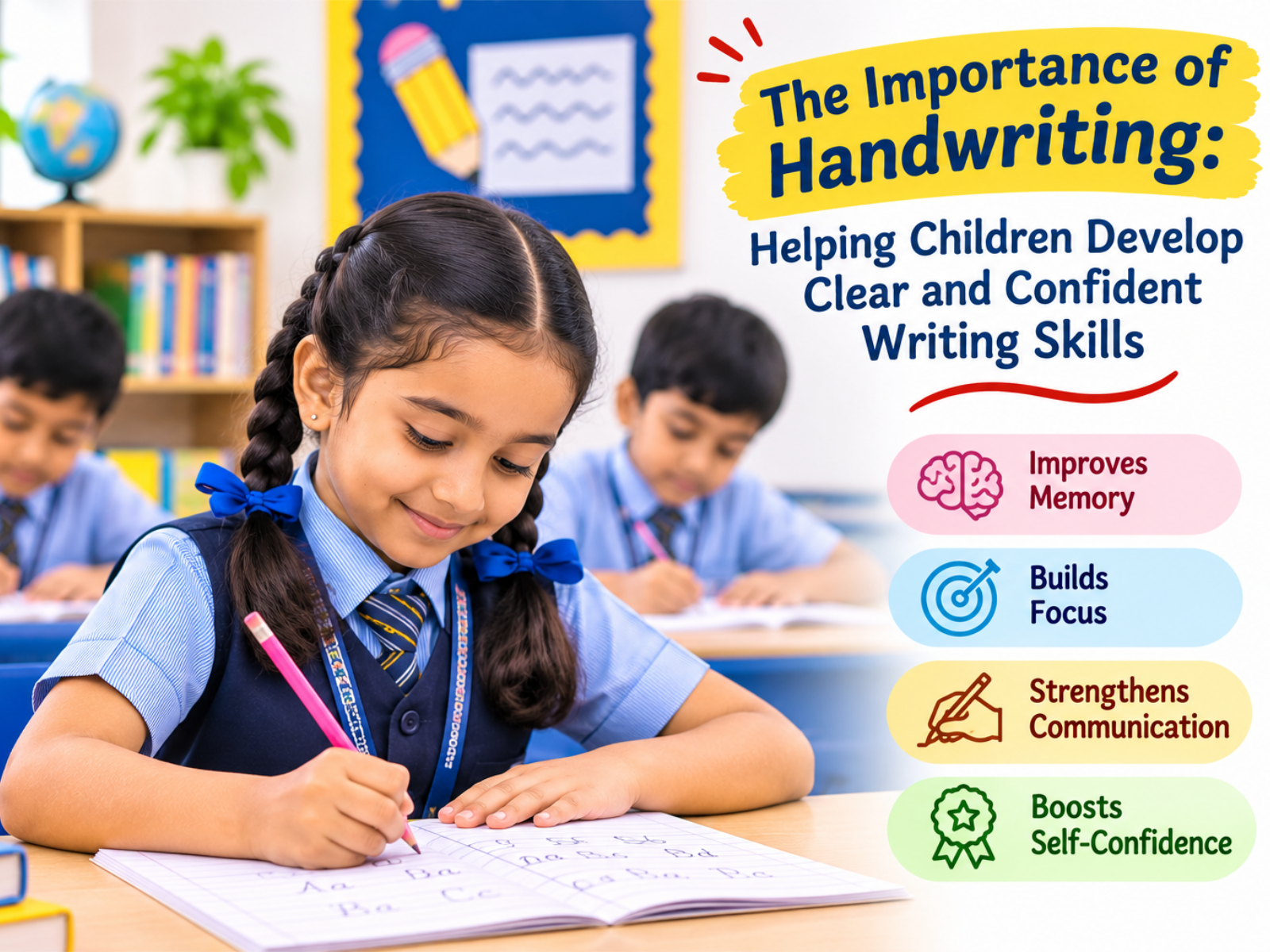
Handwriting skills for children develop gradually through regular practice, proper guidance and patience. From writing their first letters to completing classroom assignments, handwriting is an important part of a child’s learning journey.
Although children use digital devices more frequently today, the ability to write clearly by hand remains valuable. Good handwriting helps children present their ideas neatly, complete written tasks comfortably and develop confidence in their academic work.
Why Is Handwriting Important for Children?
Handwriting is more than putting letters on paper. It involves learning how to form letters, maintain appropriate spacing and express ideas in written form.
Developing good handwriting can help children:
Recognise and form letters correctly.
Improve letter spacing and word alignment.
Present schoolwork neatly.
Develop confidence in written assignments.
Practise spelling and written expression.
Complete writing activities with greater comfort.
6 Simple Ways to Improve Handwriting Skills
Children develop handwriting at different speeds. Regular, enjoyable practice can help them improve without feeling pressured.
1. Teach Correct Letter Formation
Show children how to form each letter using simple, clear strokes. Encourage them to follow the correct writing direction rather than memorising the shape alone.
2. Practise Proper Pencil Grip
Help children hold their pencils comfortably so they can write with better control. Avoid forcing an uncomfortable grip; provide gentle guidance suited to their age and development.
3. Focus on Letter Size and Spacing
Teach children to maintain consistent letter sizes and leave enough space between words. You can use ruled notebooks or writing guides to help them practise.
4. Encourage Correct Writing Posture
A comfortable sitting position makes writing easier. Encourage children to sit with their feet supported, keep the notebook at a suitable angle and avoid bending too close to the page.
5. Practise a Little Every Day
Short and regular handwriting sessions are often more helpful than long practice sessions. Begin with letters and simple words, gradually moving towards sentences.
6. Appreciate Improvement, Not Perfection
Every child progresses differently. Appreciate improvements in letter formation, spacing and neatness instead of comparing one child’s handwriting with another’s.
Fun Activities to Make Handwriting Practice Enjoyable
Handwriting practice does not always have to involve copying lines from a notebook. A little creativity can make the process more interesting.
Alphabet practice: Encourage children to write letters in different sequences.
Word of the day: Introduce one simple word and let children practise writing it.
Sentence writing: Ask children to write a short sentence about their favourite animal or activity.
Picture and description: Let children draw a picture and write one or two sentences about it.
Handwriting journal: Encourage older children to maintain a small journal about their daily experiences.
These activities provide opportunities to practise writing while expressing individual ideas.
Common Handwriting Challenges and How to Support Children
Some children may struggle with letter reversals, uneven spacing, inconsistent letter sizes or writing too quickly. These difficulties can be part of the learning process, especially in the early stages of writing.
Parents and teachers can help by:
Identifying which letters or patterns are difficult.
Providing suitable ruled paper and writing tools.
Demonstrating letters slowly and clearly.
Offering short, regular practice sessions.
Giving children enough time to complete written work.
If writing continues to feel unusually difficult or causes discomfort, parents can discuss their concerns with the child’s teacher and seek appropriate professional guidance.
Creating a Positive Writing Environment
Children benefit from a comfortable space where they can practise without distractions. A suitable table, comfortable chair, good lighting and age-appropriate writing materials can make handwriting sessions more enjoyable.
At Sparkles International School, we believe that strong learning foundations are built through regular practice, encouragement and individual attention. As we continue our journey towards becoming the Best CBSE School in Gulbarga, we value the development of essential academic skills that help children express their knowledge with confidence.