

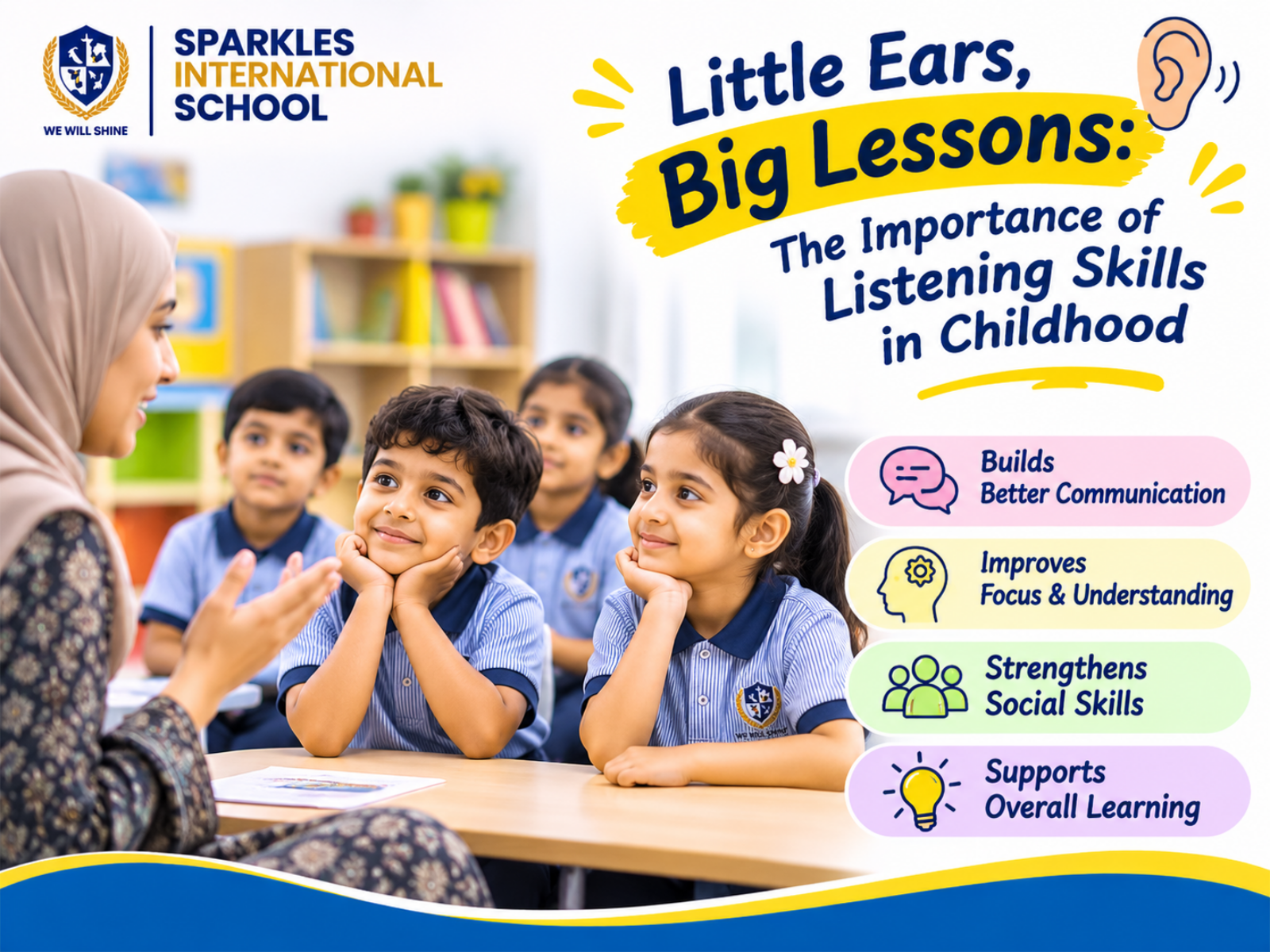
Every meaningful conversation begins with listening. Whether a child is following classroom instructions, listening to a bedtime story or talking with a friend, the ability to listen plays an important role in everyday learning.
Listening is more than hearing words. It means paying attention, understanding information and responding thoughtfully. Developing this skill during childhood helps children become better learners, communicators and friends.
At Sparkles International School, we believe that good listening habits create a strong foundation for meaningful learning and positive relationships.
Listening Is the Beginning of Learning
Children learn many new things by listening to teachers, parents and people around them. From understanding instructions to discovering new words, careful listening helps them make sense of the world.
When children learn to listen attentively, they become more comfortable participating in conversations, following directions and expressing their thoughts.
Simple Ways to Develop Listening Skills
Listening skills grow through everyday interactions. Parents and teachers can encourage children with simple activities such as:
Storytime Sessions: Reading stories aloud and asking children what happened helps improve attention and understanding.
Listen and Follow: Giving simple instructions encourages children to listen carefully before taking action.
Guess the Sound: Asking children to identify sounds such as birds chirping, bells ringing or rain falling makes listening enjoyable.
Conversation Time: Allowing children to speak and listening patiently teaches them the importance of communication.
Music and Rhymes: Listening to songs and rhymes helps children recognise sounds, words and rhythms.
Why Good Listening Habits Matter
Developing listening skills supports different areas of a child’s growth.
Better Understanding: Children can follow instructions and understand new concepts more effectively.
Language Development: Listening introduces children to new words, expressions and sentence patterns.
Improved Concentration: Paying attention to sounds and conversations encourages focus.
Positive Relationships: Listening to others helps children understand different thoughts and feelings.
Classroom Participation: Children become more confident in responding to questions and taking part in discussions.
Teaching Children to Listen with Respect
Good listening also means allowing others to speak without interruption. Children can gradually learn to wait for their turn, maintain attention and show interest when someone is talking.
Adults play an important role by setting a positive example. When children feel heard and respected, they also learn to extend the same respect to others.
Every Great Learner Begins by Listening
At Sparkles International School, we believe that education is not just about reading, writing and memorising. It is also about developing essential skills that help children communicate, understand and connect with the world around them.
As we continue our journey towards becoming the Best CBSE School in Gulbarga, we encourage our young learners to listen with attention, speak with confidence and learn with curiosity.
Because sometimes, the biggest lessons begin with simply listening!
Sparkles International School – Inspiring Young Minds, Building Bright Futures!
Frequently Asked Questions
1. Why are listening skills important for children?
Listening skills help children understand instructions, develop language, improve concentration and communicate effectively.
2. How can parents improve their child's listening skills?
Parents can read stories, play listening games, have meaningful conversations and encourage children to pay attention.
3. What are some fun listening activities for young children?
Sound identification games, storytelling, music, rhymes and follow-the-instruction games are useful activities.
4. How do listening skills help children in the classroom?
They help children understand lessons, follow directions, participate in discussions and interact positively with classmates.