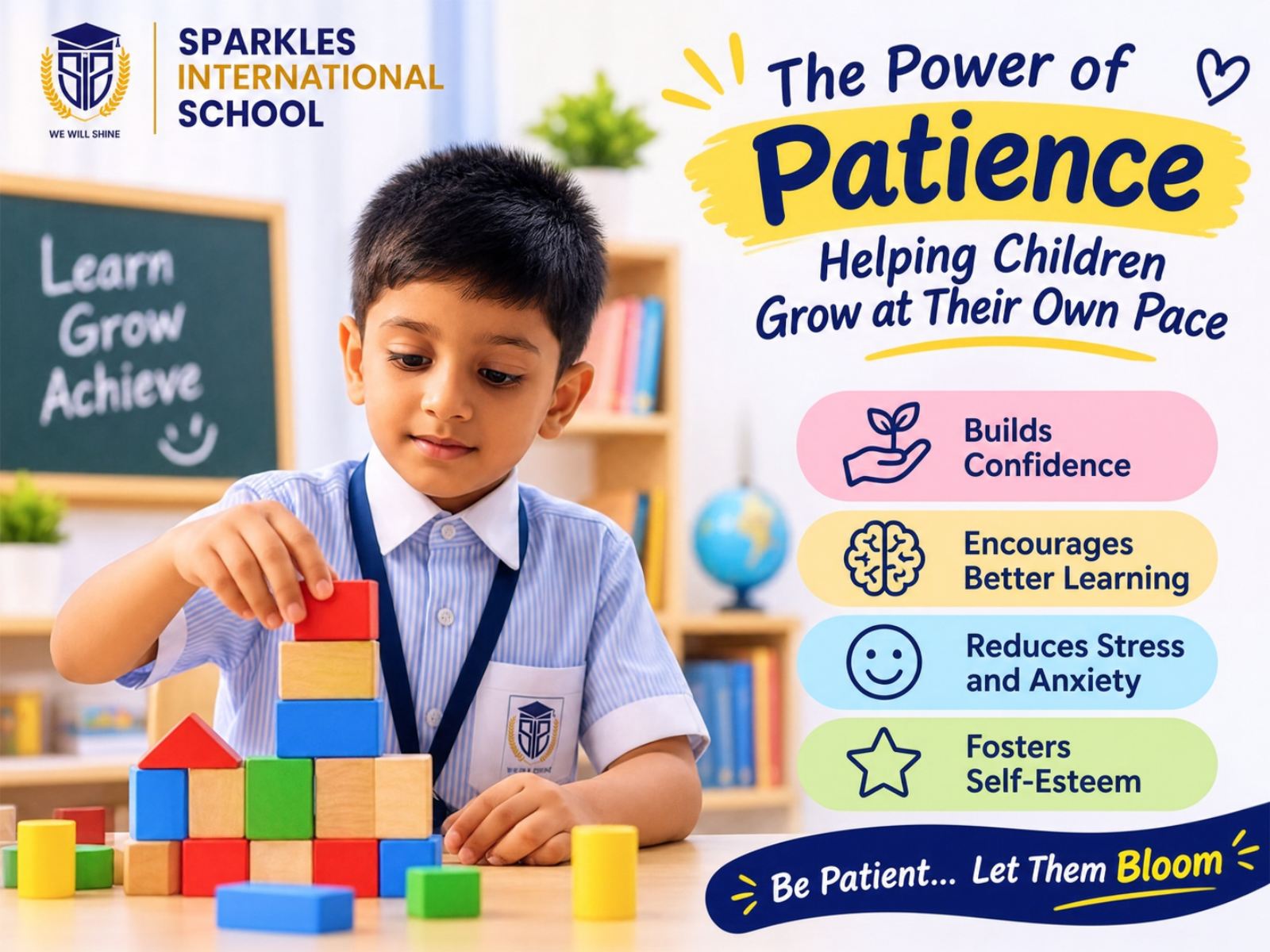
Every child has a unique way of learning, understanding and growing. Some children learn quickly, while others need more time, practice and encouragement. What matters most is giving every child the freedom to grow without feeling rushed.
Patience is one of the most valuable qualities children can develop during their early years. It teaches them to stay calm, handle challenges and understand that good things often take time.
At Sparkles International School, we believe that every little step in a child’s journey deserves appreciation. Learning is not a race; it is a beautiful process of continuous growth.
Good Things Take Time
Children naturally want things to happen immediately. Whether they are learning to solve a puzzle, complete a drawing or understand a new lesson, waiting and trying again can sometimes feel difficult.
With gentle guidance, children gradually learn that not everything happens in the first attempt. They begin to understand the value of practice, effort and perseverance.
These small experiences help children become more comfortable with challenges and develop a positive approach towards learning.
Everyday Opportunities to Practise Patience
Patience does not develop overnight. Children learn it through simple experiences in their everyday lives.
Here are a few ways parents and teachers can encourage this quality:
Taking Turns: Playing games that involve waiting for a turn teaches children to respect others.
Completing Activities: Encouraging children to finish puzzles, drawings or other tasks helps them develop concentration.
Trying Again: Reminding children that mistakes are part of learning helps them keep trying.
Waiting Calmly: Small situations, such as waiting for their favourite activity, teach children self-control.
Appreciating Effort: Praising their hard work rather than only the final result encourages them to keep improving.
Why Patience Matters in a Child's Development
Patience is more than the ability to wait. It helps children develop important qualities that support their learning and relationships.
Better Self-Control: Children gradually learn to manage their immediate reactions and respond more calmly.
Problem-Solving Skills: They become willing to explore different ways of completing a task instead of giving up quickly.
Stronger Relationships: Waiting, listening and respecting others help children build positive friendships.
Confidence to Keep Trying: Understanding that improvement takes time encourages children to face new challenges.
Independence: Children learn to complete tasks at their own pace and take pride in their efforts.
A Little Encouragement Makes a Big Difference
Children need understanding, not pressure. Comparing their progress with others can make them feel discouraged. Instead, appreciating their individual efforts helps them feel valued.
Simple words like “Take your time”, “Try once more” and “You are getting better” can make a meaningful difference.
When children receive patience from the adults around them, they gradually learn to show the same patience towards themselves and others.
Every Child Has Their Own Beautiful Journey
At Sparkles International School, we believe that meaningful education goes beyond academic achievements. It also involves developing qualities that help children become thoughtful, confident and responsible individuals.
As we work towards becoming the Best CBSE School in Gulbarga, our vision is to encourage children to enjoy learning, appreciate their progress and understand that every achievement begins with small steps.
Because growing up is not about being the fastest. It is about becoming better, one day at a time.
Sparkles International School – Inspiring Young Minds, Building Bright Futures!
FAQs
1. Why is patience important for children?
Patience helps children develop self-control, concentration, problem-solving abilities and positive relationships.
2. How can parents teach patience to young children?
Parents can encourage turn-taking, waiting calmly, completing activities and appreciating children’s efforts.
3. At what age should children start learning patience?
Children can begin developing patience during their early years through simple everyday experiences and age-appropriate activities.