

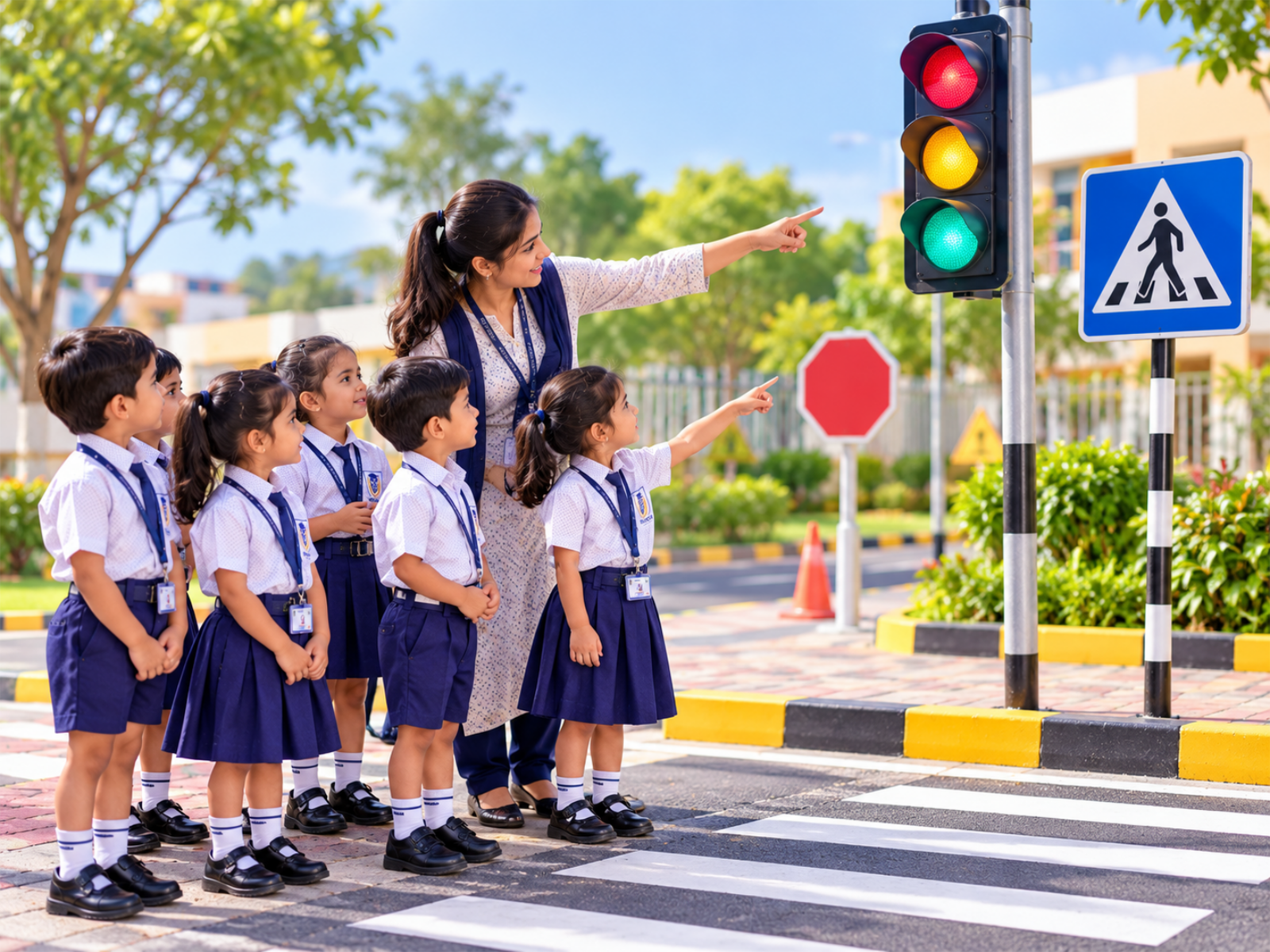
Every journey begins with a small step, but knowing how to stay safe along the way is an important lesson every child should learn. Whether walking to school, travelling with parents or crossing a road, children need to understand simple safety rules that can protect them in everyday situations.
At Sparkles International School, Kalaburagi, we believe education goes beyond classroom lessons. Teaching children about road safety helps them become more aware of their surroundings, make careful choices and develop responsible habits from an early age.
Why Road Safety Education Matters for Children
Children are naturally curious and may not always recognise potential dangers around them. Busy roads, moving vehicles and unexpected situations require attention and awareness.
Introducing road safety rules at an early age helps children understand the importance of being careful near traffic. These lessons also encourage them to listen to instructions, observe their surroundings and avoid unnecessary risks.
Essential Road Safety Rules Every Child Should Know
Simple rules, when explained and practised regularly, can help children develop safer habits.
Use pedestrian crossings: Teach children to cross roads at designated pedestrian crossings whenever available.
Look both ways: Encourage children to stop, look in both directions and listen for approaching traffic before crossing.
Follow traffic signals: Explain the meaning of red, yellow and green signals in simple language.
Walk on footpaths: Teach children to use footpaths wherever available instead of walking on the road.
Avoid running near roads: Remind children to stay calm and never chase toys or run after friends near moving vehicles.
Wear helmets and seat belts: Explain why helmets are important when travelling on two-wheelers and why seat belts should always be worn in cars.
Children should always cross roads with a responsible adult until they are old enough to understand and follow safety rules reliably.
Making Road Safety Learning Interesting
Children remember lessons better when they can connect them with practical experiences. Parents and teachers can introduce road safety concepts through simple and engaging activities.
Traffic signal games: Use red, yellow and green cards to help children understand traffic signals.
Road sign recognition: Show pictures of common road signs and explain their meanings.
Pretend road crossing: Create a simple road layout using classroom materials and demonstrate safe crossing practices.
Safety storytelling: Use short stories about road journeys to explain safe and unsafe behaviour.
Question-and-answer sessions: Ask children what they would do before crossing a road or travelling in a vehicle.
These activities make safety education easier to understand and remember.
Parents Are Children's First Road Safety Teachers
Children often learn by observing the behaviour of adults. When parents follow traffic rules, wear helmets, use seat belts and cross roads carefully, children begin to recognise these actions as important habits.
Parents can also explain road safety during everyday journeys. A short conversation while walking to a nearby shop or travelling to school can become a meaningful learning opportunity.
Most importantly, adults should never encourage children to take risks near roads or allow them to cross independently before they are ready.
Building Responsible Habits Beyond the Classroom
Road safety is not simply about memorising traffic rules. It is about developing awareness, patience and responsibility in everyday situations.
When children learn to pay attention, follow instructions and make careful decisions, they begin developing habits that are useful in many areas of life.
At Sparkles International School, Kalaburagi, we believe meaningful education prepares children for real-world situations alongside academic learning. Parents looking for the Best CBSE School in Gulbarga can consider how a school’s approach supports children’s awareness, responsibility and overall development.
Safe Habits Today, Safer Journeys Tomorrow
A child’s safety begins with small lessons repeated every day. Learning to recognise traffic signals, use pedestrian crossings and follow safety instructions can make an important difference.
Because teaching children to stay safe today helps them make responsible choices throughout their lives.