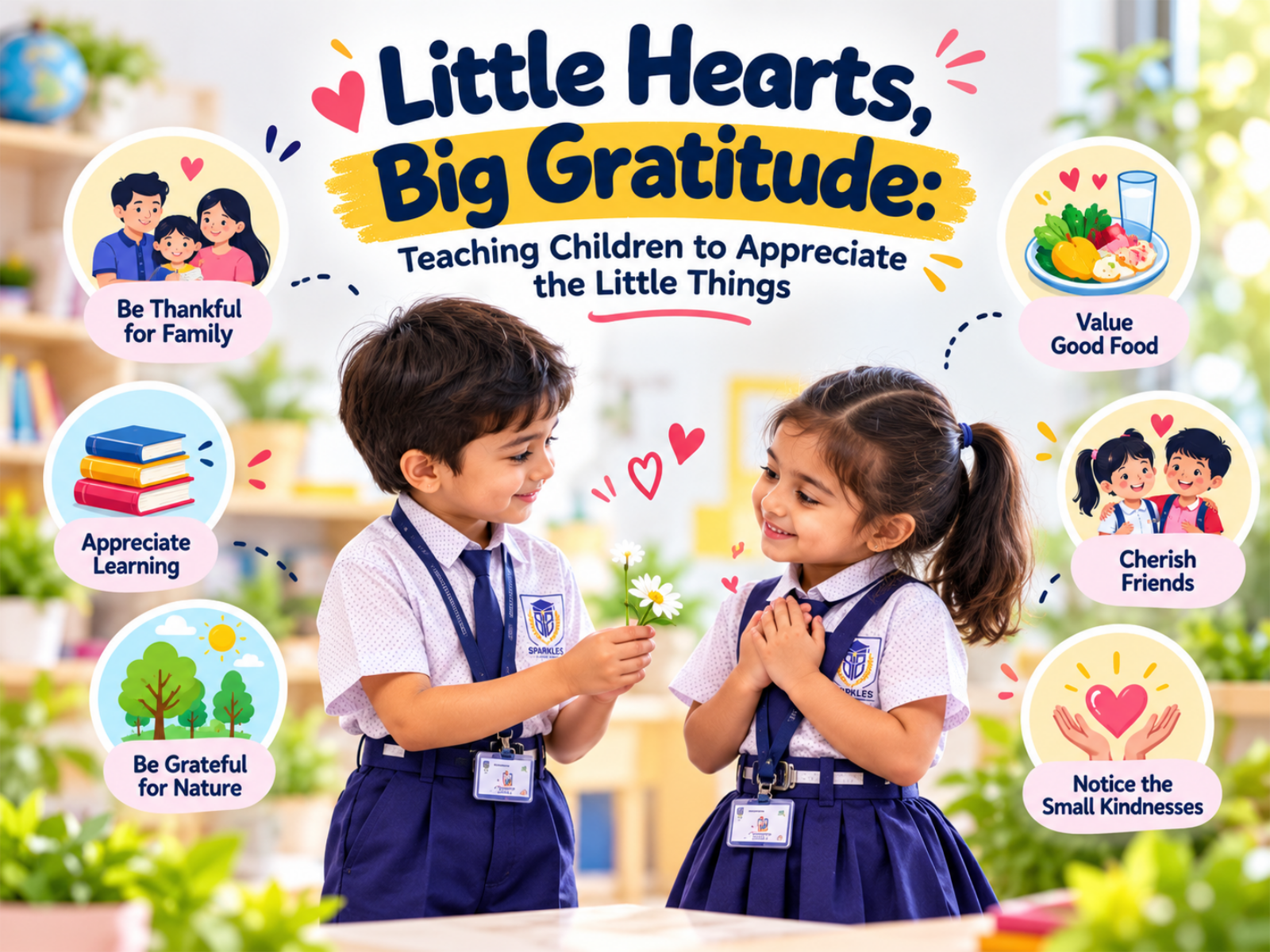
A simple “thank you,” a kind gesture or a thoughtful smile can make someone’s day brighter. Children experience many small moments of kindness every day, but learning to recognise and appreciate them is a valuable lesson that stays with them as they grow.
Teaching gratitude is not just about encouraging children to say thank you. It is about helping them notice the good around them, value the efforts of others and develop a caring attitude towards people.
At Sparkles International School, Kalaburagi, we believe education should nurture not only academic abilities but also positive values that help children become thoughtful and responsible individuals.
Why Gratitude Matters in Childhood
Children gradually learn how their words and actions affect the people around them. When they understand the importance of appreciation, they begin to recognise kindness, respect others’ efforts and value everyday experiences.
Simple habits such as thanking a friend for sharing, appreciating a teacher’s help or acknowledging a parent’s efforts can encourage empathy and stronger relationships.
Gratitude also helps children look beyond what they want and notice what they already have.
Gratitude becomes meaningful when children practise it in everyday situations. Parents and teachers can introduce simple activities that make appreciation a natural habit.
The thank-you habit: Encourage children to say thank you whenever someone helps them or does something kind.
Appreciation moments: Ask children to share one thing they enjoyed or appreciated during the day.
Gratitude drawings: Let younger children draw pictures of people, experiences or things they feel thankful for.
Kindness notes: Encourage children to create small notes or cards for friends, family members and teachers.
Recognising everyday efforts: Help children notice the people who prepare their meals, maintain their surroundings and support their learning.
These little practices can help children understand that appreciation does not always require a special occasion.
Children learn many values by observing adults. When parents appreciate one another, thank people for their help and speak respectfully, children begin to understand how gratitude is expressed.
Teachers can also encourage appreciation by recognising cooperation, kindness and helpful behaviour in the classroom.
For example, when one child helps another arrange classroom materials, appreciating that action can encourage both children to understand the importance of helping others.
Gratitude and the Importance of Kindness
Gratitude and kindness often grow together. A child who learns to appreciate others may become more willing to share, help and include classmates in activities.
These experiences can create a more welcoming environment where children feel valued and learn to value others in return.
The aim is not to force children to express gratitude. Instead, adults should create opportunities for them to understand and practise appreciation sincerely.
Building Positive Values Beyond the Classroom
Education is not limited to lessons, books and examinations. The values children develop through everyday experiences also shape the way they interact with the world.
At Sparkles International School, Kalaburagi, we believe that encouraging kindness, respect and appreciation is an important part of children’s overall growth. Parents searching for the Best CBSE School in Kalaburagi or a Top School in Gulbarga can look for an educational environment that values character development alongside academic learning.
Small Thank-Yous, Meaningful Life Lessons
A child’s understanding of gratitude begins with simple moments—a thank-you to a friend, appreciation for a teacher or a smile towards someone who has helped them.
These small expressions can gradually become meaningful habits that influence how children treat others.
Because children who learn to appreciate little things often grow into individuals who understand the value of people, kindness and meaningful relationships.