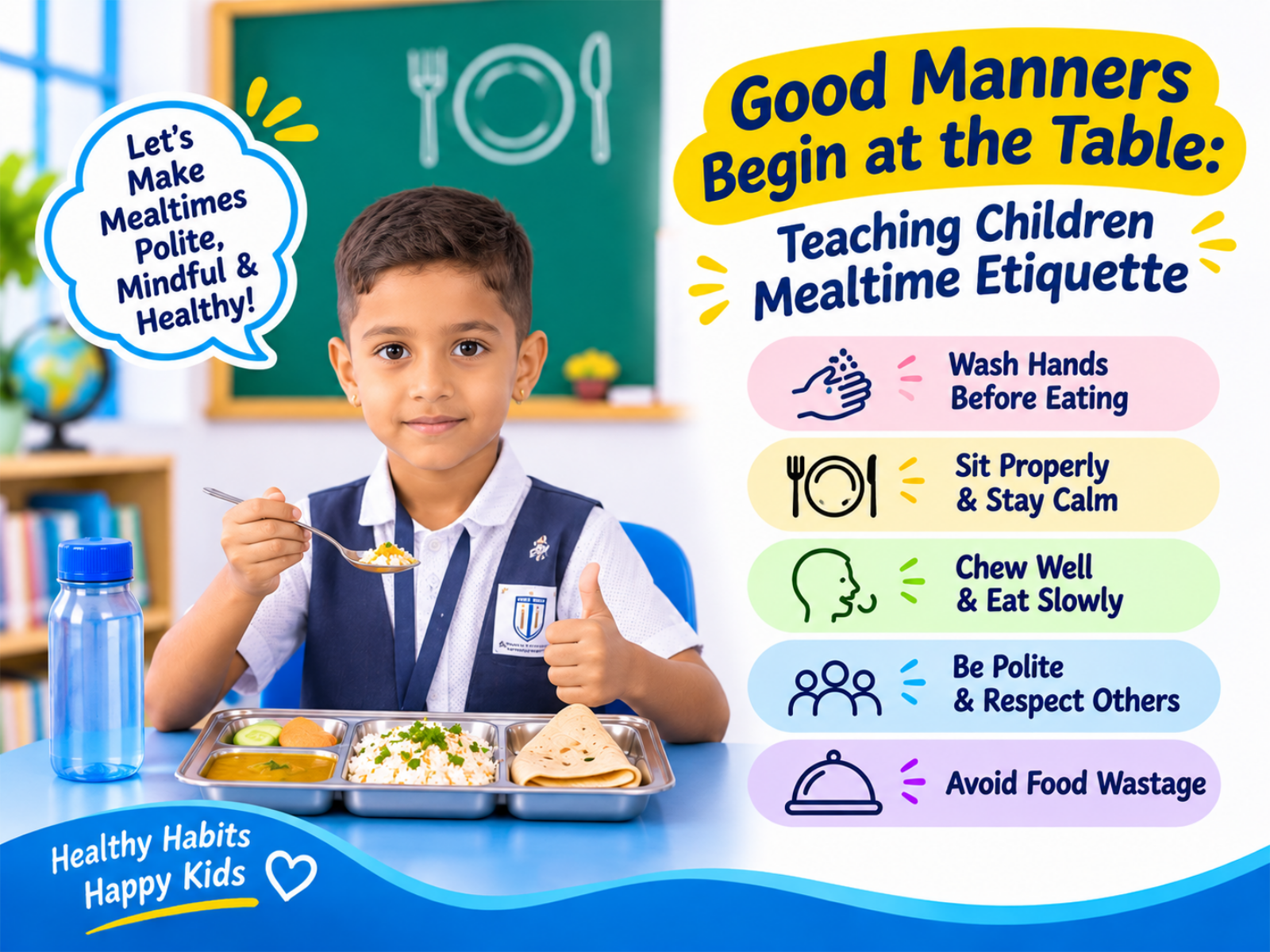
Mealtimes are about more than enjoying food. They are also opportunities for children to learn patience, courtesy, respect and consideration for others.
Whether eating at home, having lunch with classmates or attending a family gathering, simple table manners help children feel comfortable in different social settings. These habits may seem small, but practising them regularly can make a positive difference as children grow.
Why Are Table Manners Important for Children?
- Table manners teach children how to behave thoughtfully when sharing a meal with others. They also help make mealtimes more pleasant and enjoyable.
Learning good mealtime habits can help children:
Show respect towards people sharing the meal.
Develop patience while waiting for their turn.
Become more independent during mealtimes.
Understand the importance of cleanliness.
Communicate politely with others.
Feel more confident when eating in different settings.
8 Simple Table Manners Every Child Should Learn
1. Wash Hands Before Eating
Teach children to wash their hands with soap and water before meals. This simple habit encourages cleanliness and helps reduce the spread of germs.
2. Say Please and Thank You
Encourage children to use polite words when asking someone to pass food or when receiving something. Small expressions of gratitude make shared meals more pleasant.
3. Sit Properly at the Dining Table
Help children understand how to sit comfortably and safely while eating. Encourage them to avoid standing on chairs, leaning across the table or disturbing others.
4. Chew Food with the Mouth Closed
Teach children to chew with their mouths closed and avoid talking while their mouths are full. Explain this gently through everyday examples.
5. Wait for Everyone Before Starting
When sharing a family meal, encourage children to wait until everyone is ready before beginning. This teaches patience and consideration.
6. Ask Politely for What They Need
Instead of reaching across the table, children can politely ask someone to pass an item. This is a simple way to practise respectful communication.
7. Avoid Wasting Food
Encourage children to take a suitable portion and ask for more if they are still hungry. Help them understand that food should be valued and handled responsibly.
8. Help Clear Up After Eating
Depending on their age, children can carry their plates to the kitchen, put away their water bottles or help tidy their eating area. These small actions encourage participation in family routines.
How Parents Can Teach Good Mealtime Habits
Children learn table manners best through regular practice and positive examples. Parents do not need to teach every rule at once.
Here are some simple ways to encourage good habits:
Make family mealtimes an opportunity to practise polite behaviour.
Demonstrate the manners you want children to follow.
Give gentle reminders instead of scolding.
Appreciate children when they show good manners.
Allow them to perform age-appropriate tasks independently.
Keep mealtimes relaxed and welcoming.
Remember that children may forget a habit sometimes. Patient reminders and consistent encouragement help them learn gradually.
Making Mealtimes a Positive Social Experience
Eating together gives children opportunities to listen, share experiences and enjoy conversations with family members. It also helps them understand that mealtimes are moments to connect with others.
Parents can encourage children to talk about their day, listen when someone else is speaking and show interest in the people around them. These simple interactions help make shared meals meaningful.
Teaching Good Values Beyond the Classroom
Education also includes the everyday values children practise outside their lessons. Courtesy, patience, cleanliness and respect are important habits that can be encouraged at home and reinforced through school life.
At Sparkles International School, we believe that a child’s growth includes developing good manners, positive values and consideration for others.
As we continue our journey towards becoming the Best CBSE School in Gulbarga, we value the small everyday lessons that help children become thoughtful, confident and respectful individuals.
Little Manners Make a Lasting Impression
Good table manners are not about following complicated rules. They begin with simple actions such as washing hands, saying thank you, waiting patiently and respecting others.
When parents and teachers encourage these habits consistently, children learn to carry courtesy beyond the dining table and into their everyday lives.
Let’s help our children understand that good manners are not just about what we do, but also about how we make others feel!
FAQs
1. At what age should children start learning table manners?
Children can begin learning simple mealtime habits from an early age, such as washing their hands, sitting safely and using polite words. More complex manners can be introduced as they grow.
2. How can parents teach table manners without scolding children?
Parents can demonstrate good manners, give gentle reminders and appreciate positive behaviour. Practising one or two habits at a time can make learning easier.
3. Why should children learn to avoid wasting food?
Learning not to waste food helps children appreciate the effort involved in preparing meals and develop thoughtful eating habits. Encourage them to take suitable portions and ask for more when needed.
4. How do table manners help children in social situations?
Good table manners help children feel more comfortable when eating with relatives, friends, classmates or guests. They also encourage courtesy, patience and respect for others.