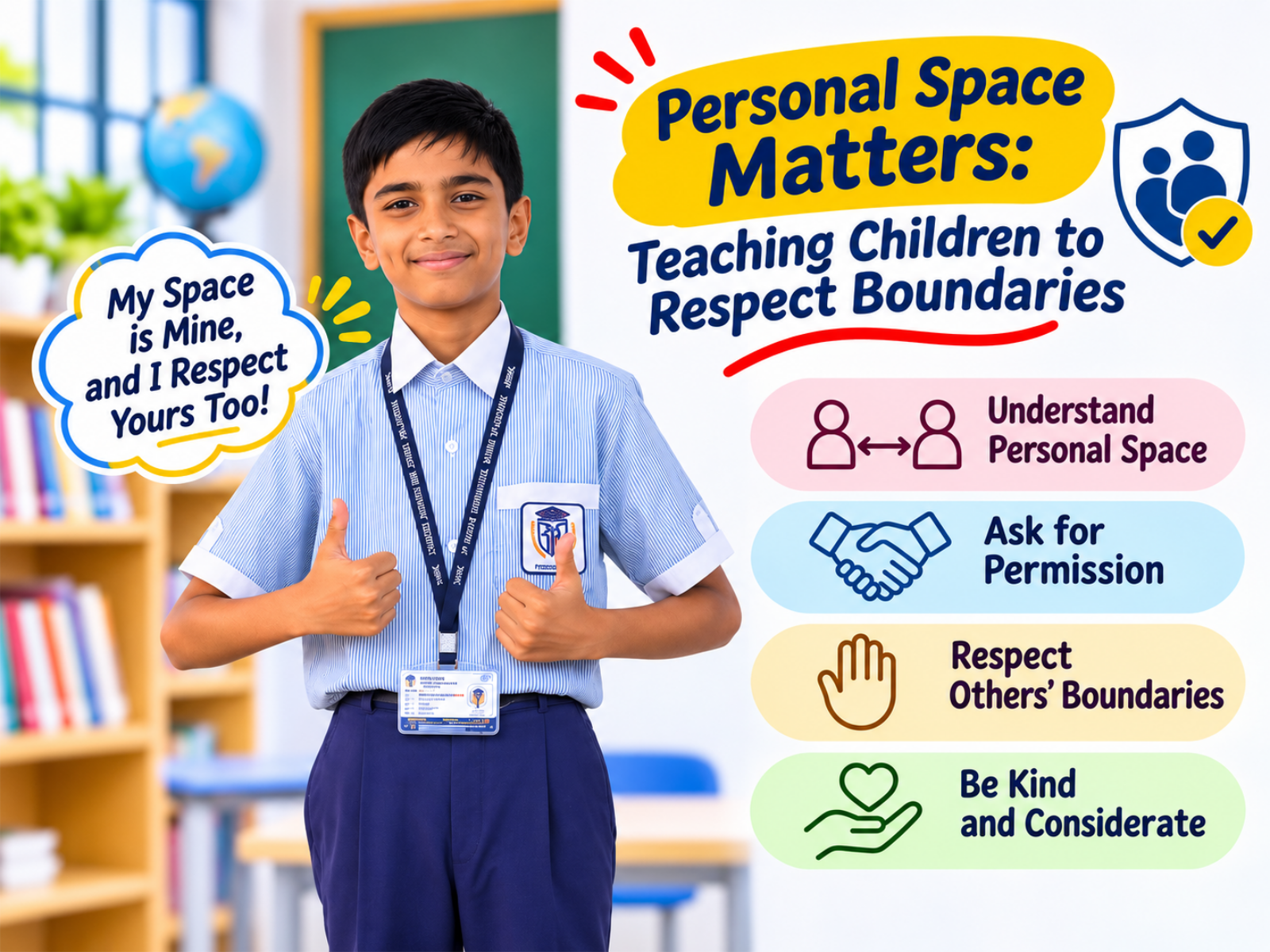
Growing up is not only about learning school subjects. It is also about understanding ourselves, respecting others and developing healthy relationships. One important lesson children need to learn is that everyone has personal space and individual boundaries.
From sharing toys to playing with friends, children experience many situations where they need to understand what makes others comfortable or uncomfortable. Learning to respect personal space helps them interact thoughtfully and build positive relationships.
What Is Personal Space?
Personal space is the comfortable physical and emotional space a person needs around them. It can be different for every individual.
For children, understanding personal space begins with simple lessons such as asking before hugging someone, respecting another person’s belongings and recognising when a friend needs some space.
These small lessons help children understand that everyone deserves to feel safe, comfortable and respected.
Why Should Children Learn About Personal Boundaries?
Teaching children about boundaries helps them understand that their feelings and the feelings of others matter.
It can help children:
Respect other people’s comfort and preferences.
Express their own feelings clearly.
Understand the importance of asking permission.
Develop respectful friendships.
Recognise when someone does not want physical contact.
Feel more confident speaking up when something makes them uncomfortable.
6 Simple Ways to Teach Children About Personal Space
1. Teach Them to Ask Before Touching
Explain that children should ask before hugging, holding hands or touching another person. If someone says no, they should respect that answer without forcing physical contact.
2. Help Them Understand the Word ‘No’
Children should learn that saying no is acceptable when they feel uncomfortable. They should also understand that other people’s no must be respected.
3. Respect Their Own Belongings and Others’ Belongings
Teach children to ask before using a friend’s pencil, notebook, toy or other personal item. Encourage them to take care of their own belongings too.
4. Recognise When Someone Needs Space
Sometimes a friend may want to play alone or may not feel like talking. Help children understand that giving someone space is also a way of showing respect.
5. Encourage Them to Express Their Feelings
Give children simple words they can use, such as “I don’t like that,” “Please give me some space” or “Can I have a turn?” Practising these expressions can help them communicate comfortably.
6. Lead by Example
Children learn by observing adults. Respect their preferences, listen when they express discomfort and ask permission before using their belongings. Everyday examples make these lessons easier to understand.
How Parents and Teachers Can Work Together
Children understand boundaries better when the adults around them follow consistent and respectful practices.
Parents and teachers can support children by:
Listening patiently when children share their experiences.
Avoiding the pressure to hug or kiss someone as a greeting.
Encouraging respectful behaviour during play and group activities.
Teaching children that they can approach a trusted adult if they feel uncomfortable.
Responding calmly when children express concerns.
Reminding children that personal boundaries apply to everyone.
Children should never feel ashamed or afraid to speak up about something that makes them uncomfortable.
Creating a Respectful School Environment
A positive school environment gives children opportunities to practise kindness, cooperation and mutual respect. Classroom activities, group interactions and everyday conversations can reinforce the importance of respecting personal space.
At Sparkles International School, we believe education should nurture not only academic abilities but also values that help children become considerate and responsible individuals.
As we continue our journey towards becoming the Best CBSE School in Gulbarga, we value an environment where every child is encouraged to feel respected, express themselves and treat others with kindness.
FAQs
1. What does personal space mean for children?
Personal space means understanding how much physical and emotional space someone feels comfortable with. Children learn this by respecting others’ preferences, asking before touching and recognising when someone needs space.
2. How can parents teach children to respect personal boundaries?
Parents can teach boundaries through everyday examples, such as asking permission before hugging, respecting personal belongings and listening when children express discomfort.
3. Why is it important for children to learn to say no?
Learning to say no helps children express their discomfort, communicate their preferences and speak up when something does not feel right. They should also learn to respect others when they say no.