

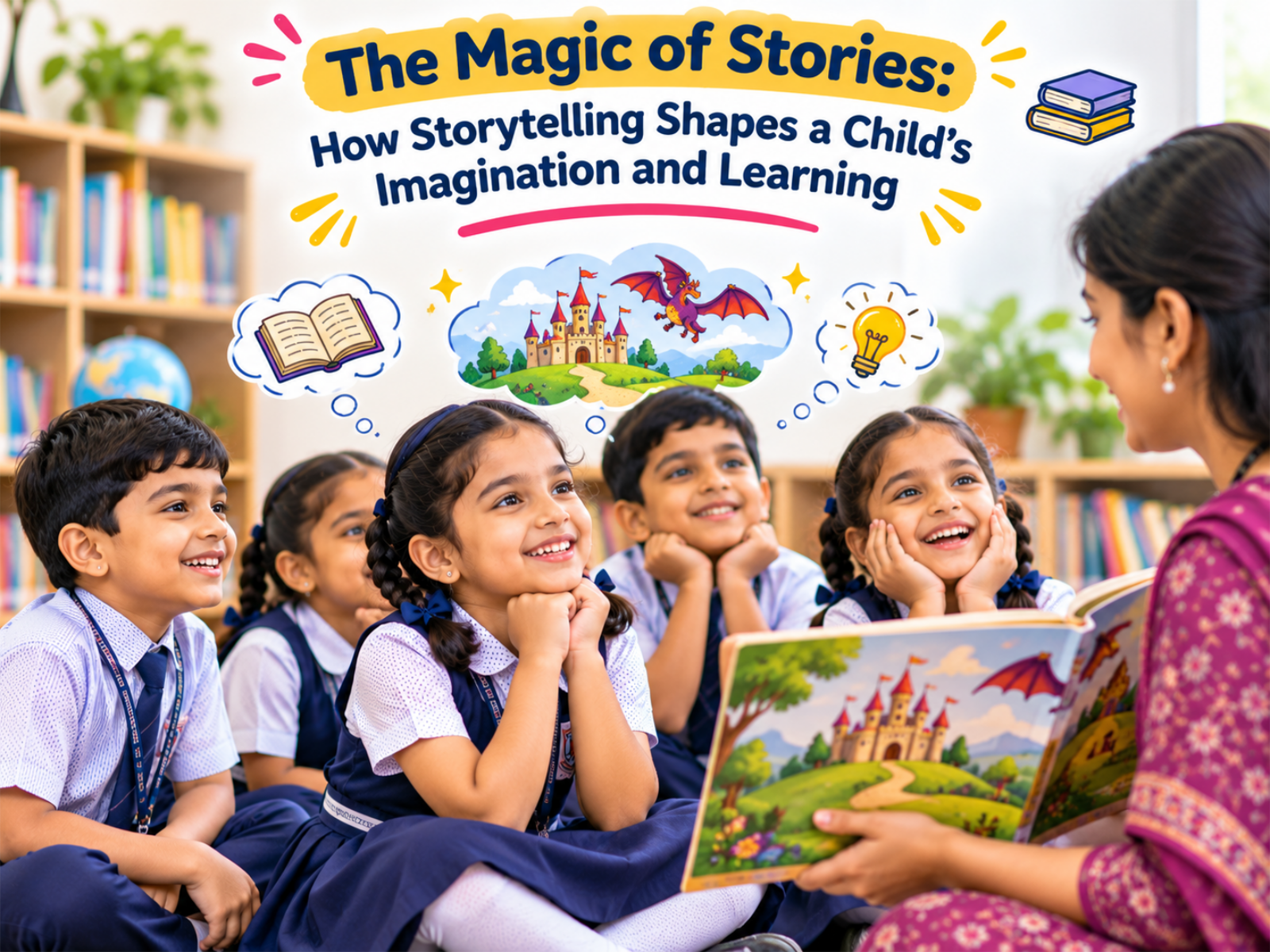
A simple story can take a child to a magical forest, introduce them to fascinating characters or teach them an important life lesson. For children, storytelling is much more than entertainment. It is a wonderful way to explore ideas, understand emotions and develop a love for language.
Whether it is a bedtime story at home or a story session in the classroom, these moments can leave a lasting impression on young minds.
Why Is Storytelling Important for Children?
Stories introduce children to new words, situations and experiences. As they listen, imagine and follow what happens next, they naturally develop several important skills.
Storytelling also creates opportunities for meaningful conversations between children and adults, making learning enjoyable and memorable.
5 Ways Storytelling Supports Child Development
1. Strengthens Language and Vocabulary
Listening to stories introduces children to new words, sentence patterns and expressions. Repeated exposure to language helps them improve their vocabulary and communicate their thoughts more clearly.
2. Develops Imagination and Creativity
Stories encourage children to picture places, characters and events in their minds. They begin to imagine different possibilities and create their own stories, supporting creative thinking.
3. Improves Listening and Concentration
Following a story requires children to listen carefully, remember details and understand what happens next. These experiences help strengthen attention and listening skills.
4. Teaches Values Through Characters
Stories often introduce children to kindness, honesty, sharing, courage and friendship. By observing characters and their choices, children can understand values through relatable situations.
5. Helps Children Understand Emotions
Story characters experience happiness, sadness, fear, excitement and disappointment. Discussing these feelings helps children recognise emotions and understand how others may feel.
Simple Ways Parents Can Make Storytelling Special
ou do not need expensive books or elaborate activities to make storytelling enjoyable. A few simple practices can create wonderful learning moments.
Read together every day: Set aside a few minutes for a story before bedtime or during free time.
Use different voices: Give characters different voices and expressions to make stories lively.
Ask questions: Ask children what they think might happen next or how a character feels.
Encourage retelling: Let children narrate the story in their own words.
Create stories together: Start a simple story and allow your child to add characters, places and events.
Bringing Stories into Classroom Learning
Storytelling can make classroom learning more interactive. Teachers can use picture books, rhymes, puppets, role-play and group discussions to encourage children to participate and express themselves.
At Sparkles International School, we value learning experiences that encourage children to communicate, imagine and explore. As a school aspiring to be recognised as the Best CBSE School in Gulbarga, we believe that developing a love for learning begins with meaningful experiences that nurture the whole child.