

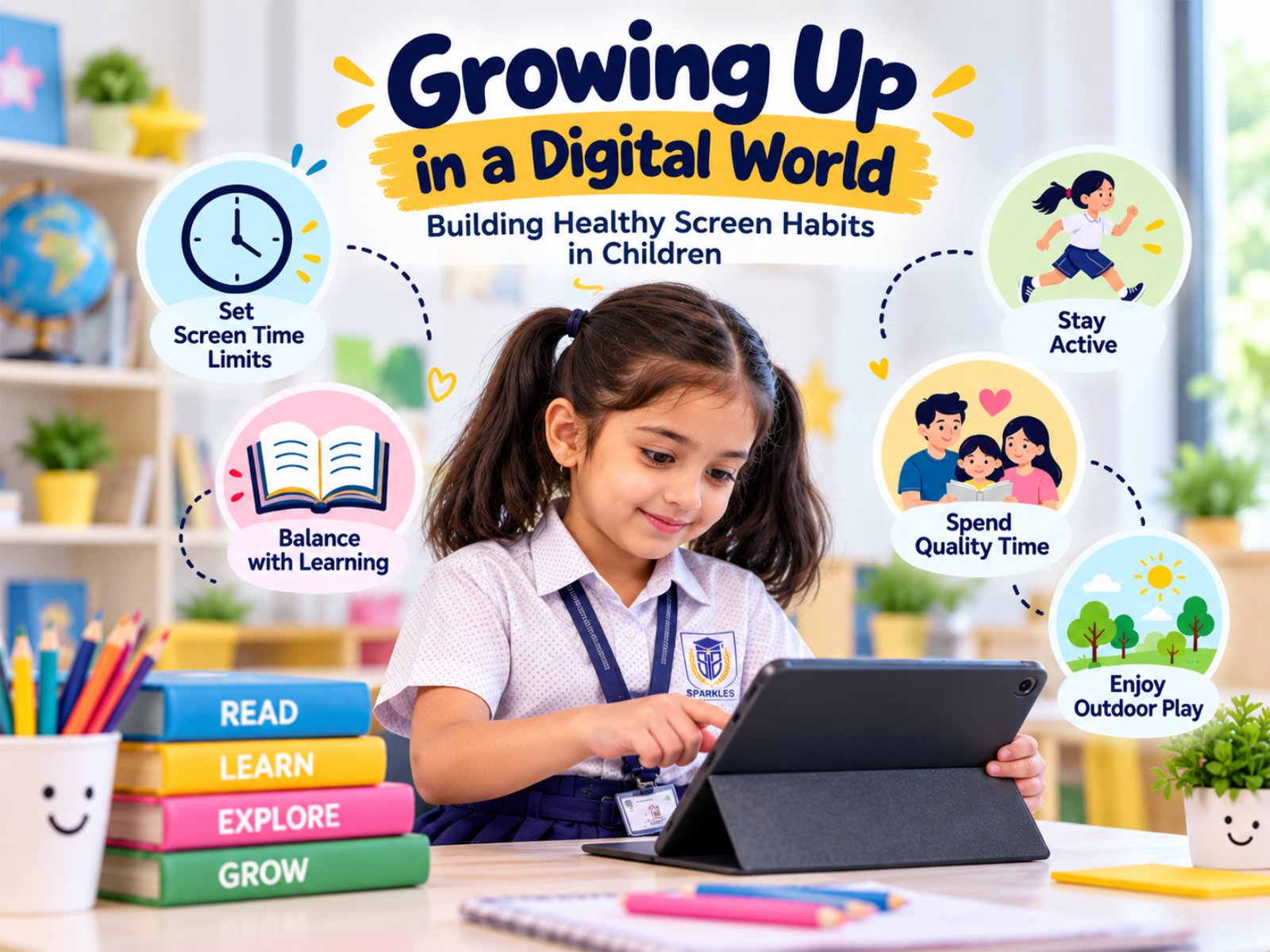
Screens have become a familiar part of children’s everyday lives. From watching cartoons and playing digital games to exploring educational videos, children are surrounded by technology from an early age. While digital devices can offer interesting learning opportunities, helping children use them wisely is equally important.
At Sparkles International School, Kalaburagi, we believe that childhood should include a healthy balance of learning, creativity, physical activities, family conversations and play. Teaching children healthy screen habits can help them develop a balanced relationship with technology as they grow.
Understanding the Impact of Screen Time
Digital content can introduce children to new ideas, stories and information. Educational videos and age-appropriate applications can make certain topics easier to understand when used thoughtfully.
However, spending too much time in front of screens can reduce opportunities for activities such as outdoor play, reading, creative exploration and face-to-face interaction. Children need a variety of experiences to support their overall development.
The goal is not to keep technology away completely, but to help children understand when and how to use it appropriately.
Simple Ways to Build Healthy Screen Habits
Parents can introduce small daily practices that encourage children to use digital devices responsibly.
Set clear screen-time limits: Establish consistent and age-appropriate boundaries for using mobile phones, tablets and televisions.
Encourage outdoor activities: Make time for cycling, running, playing games and exploring the surroundings.
Create screen-free family moments: Keep mealtimes and family conversations free from digital distractions.
Choose meaningful content: Prefer age-appropriate educational programmes and videos over endless entertainment.
Avoid screens before bedtime: Develop a calming bedtime routine that includes reading, storytelling or quiet activities.
Be a positive role model: Children often imitate adult behaviour, so parents should also practise mindful device use.
Small changes, followed consistently, can make a difference in children’s everyday routines.
Making Room for Creativity Beyond Screens
Children do not always need a digital device to stay entertained. Drawing, painting, building with blocks, solving puzzles, storytelling and imaginative play can keep young minds engaged in meaningful ways.
These activities encourage children to explore their ideas, experiment with different possibilities and enjoy learning through direct experiences.
Sometimes, the simplest activities – such as colouring a picture, arranging toys or helping with a household task – can become wonderful opportunities for discovery.
The Role of Parents in Digital Guidance
Children need guidance rather than constant restrictions. Parents can explain why certain screen-time boundaries are important and involve children in choosing enjoyable alternatives.
Instead of simply saying no to a device, suggest an interesting activity they can try. Reading a story together, playing a board game or spending time outdoors can make screen-free moments enjoyable.
Most importantly, parents should remain aware of the content children watch and the digital platforms they access.
Creating a Balanced Childhood
Technology is part of the modern world, and children will continue to encounter it as they grow. Learning to use it thoughtfully is an important everyday skill.
A balanced childhood gives children opportunities to enjoy technology while also experiencing real-world friendships, physical play, creative activities and meaningful conversations.
At Sparkles International School, Kalaburagi, we value learning experiences that support children’s all-round development. Parents searching for the Best CBSE School in Gulbarga can consider how a school’s educational approach encourages children to grow through learning, interaction and experiences beyond digital screens.
Because the best childhood experiences are not always found on a screen. Sometimes, they begin with a simple game, a creative idea or a conversation with someone they love.