

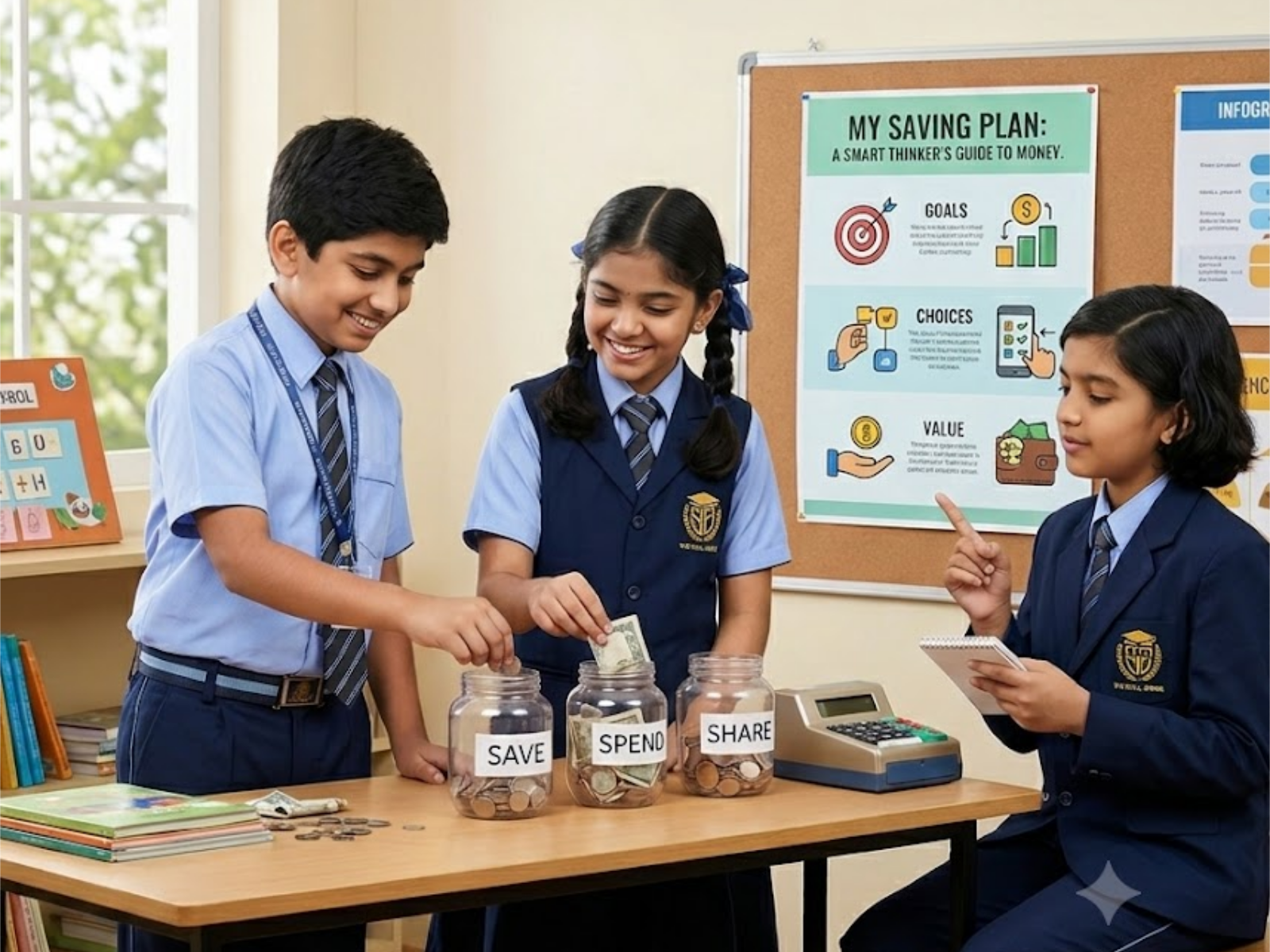
A child who learns to save a few coins today may grow into an adult who makes thoughtful decisions tomorrow. Everyday experiences, such as choosing between two items, saving for a favourite toy or understanding why we cannot buy everything at once, can introduce children to valuable life lessons.
At Sparkles International School, Kalaburagi, we believe learning extends beyond textbooks. Introducing children to the basic value of money in age-appropriate ways can help them develop responsibility, patience and thoughtful decision-making.
Why Children Should Learn About Money Early
Children often see adults using money to buy groceries, clothes, toys and other everyday necessities. These simple observations can become opportunities to explain that money is a resource that needs to be used thoughtfully.
Early financial learning does not need to involve complicated calculations. It can begin with understanding the difference between needs and wants, learning that things have different prices and recognising the importance of saving.
These small lessons help children begin to understand everyday choices and the value of planning ahead.
Simple Activities That Make Money Learning Fun
Children learn effectively when they can connect new ideas with familiar experiences. Parents and teachers can introduce basic money concepts through simple activities.
Pretend shopping: Set up a small shop at home with toys, books or stationery and let children practise choosing items and paying with play money.
The savings jar: Encourage children to save small amounts towards a simple goal, helping them understand patience and progress.
Needs and wants: Talk about the difference between essential items, such as food and school supplies, and things children would simply like to have.
Comparing prices: When appropriate, show children that similar products may have different prices and explain why comparing options can be useful.
Making simple choices: Give children opportunities to choose between a few suitable options while staying within an agreed budget.
Such activities turn an everyday concept into an engaging learning experience.
Learning Patience Through Saving
Children naturally feel excited when they want something. Learning to save towards a goal gives them an opportunity to practise waiting, setting priorities and appreciating gradual progress.
For example, a child saving towards a favourite book can watch the savings grow over time. Reaching the goal can help the child understand how small, consistent actions contribute to a larger achievement.
The aim is not to make children worry about money. It is to help them develop a healthy understanding of saving, spending and making choices.
How Parents Can Build Healthy Money Habits
Parents play an important role in shaping children’s attitudes towards money. Everyday conversations can introduce useful lessons without turning them into formal lectures.
Parents can explain simple purchasing decisions, encourage children to take care of their belongings and praise thoughtful choices. Giving children small, age-appropriate responsibilities can also help them understand that resources should be treated with care.
Most importantly, children should learn that money is a tool for meeting needs and making choices – not a measure of a person’s worth.
Preparing Children for Everyday Life
Education prepares children not only for academic achievement but also for the decisions they will make as they grow. Learning about money can introduce practical skills such as planning, comparing options, setting goals and taking responsibility.
At Sparkles International School, Kalaburagi, we value meaningful learning experiences that connect classroom knowledge with everyday life. Parents searching for the Best CBSE School in Gulbarga can consider how a school’s learning approach supports children’s overall development alongside their academic progress.
Because helping children make thoughtful choices today can prepare them for greater independence tomorrow.