

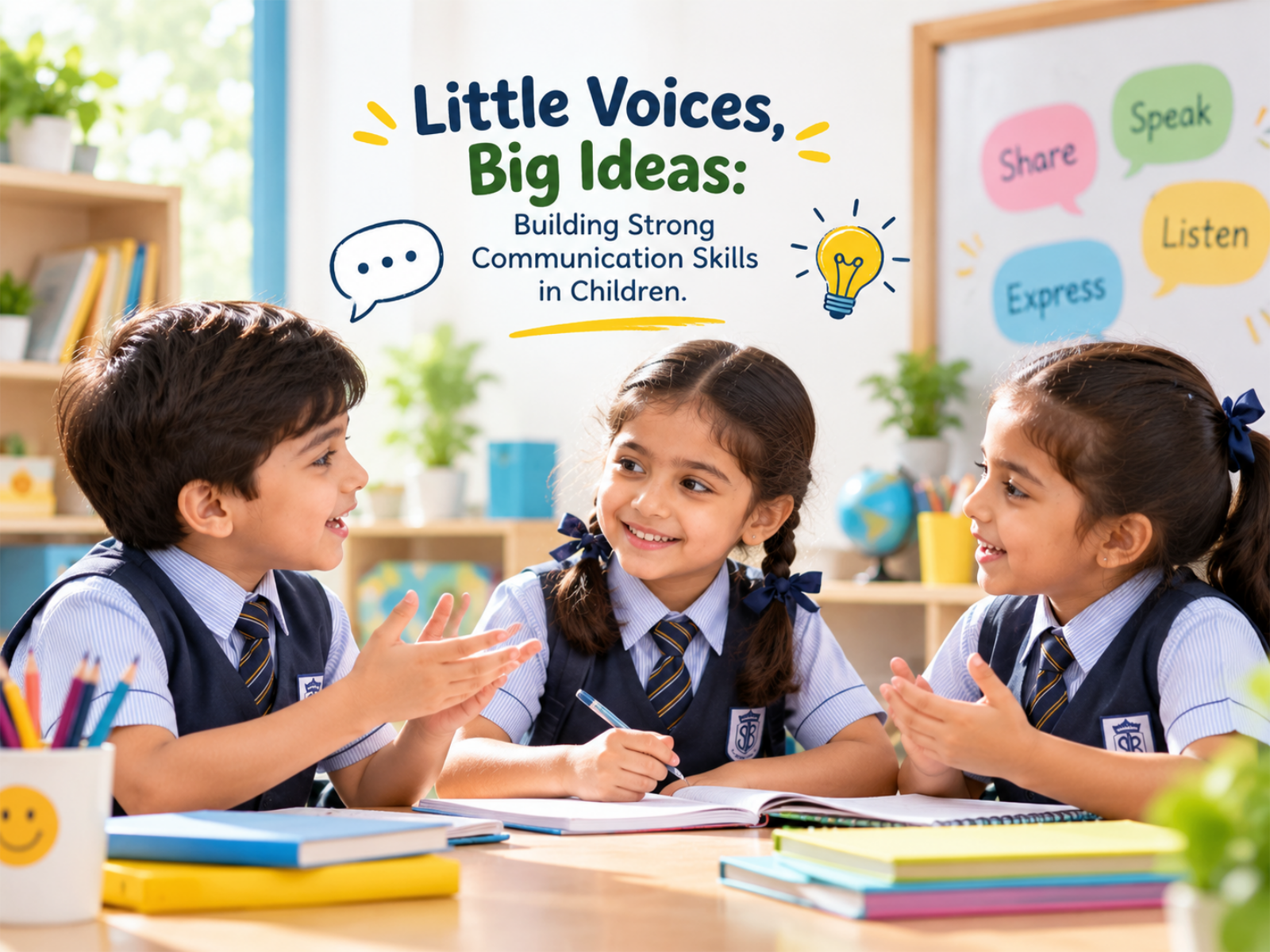
Every child has a story to tell, an idea to share and a question waiting to be asked. Sometimes, children express themselves through words; at other times, they communicate through gestures, expressions and actions. Helping them find their voice is an important part of their learning journey.
At Sparkles International School, Kalaburagi, we believe that communication skills in children develop through everyday conversations, classroom participation and opportunities to express their thoughts freely. When children feel heard and encouraged, they gradually become more comfortable sharing ideas, asking questions and connecting with others.
Why Communication Skills Matter in Early Education
Communication is more than speaking clearly. It involves listening carefully, understanding others, expressing feelings and responding respectfully.
Children who get regular opportunities to communicate can practise explaining their ideas, learning new words and participating in group activities. These experiences also help them develop confidence when interacting with classmates and teachers.
Simple Ways Children Learn to Express Themselves
Children build communication skills through meaningful experiences rather than memorising words alone.
Storytelling sessions: Listening to stories and retelling them encourages imagination, vocabulary and sentence formation.
Show-and-tell activities: Talking about a favourite toy, book or object gives children a comfortable opportunity to speak in front of others.
Group conversations: Sharing ideas during classroom discussions helps children learn to take turns and listen to different viewpoints.
Role-play activities: Pretending to be a teacher, doctor, shopkeeper or community helper allows children to practise everyday conversations.
Asking questions: Encouraging children to ask questions helps them express curiosity and seek understanding.
Each small interaction gives children another opportunity to practise expressing themselves.
The Importance of Listening, Too
Good communication begins with listening. When children learn to listen without interrupting, wait for their turn and respect another person’s words, they begin to understand that conversations involve everyone.
Parents and teachers can support this habit by giving children their full attention, responding patiently and asking simple follow-up questions. Even a short conversation about the school day can help children feel valued and understood.
Creating a Space Where Every Child Feels Heard
Not every child speaks with the same level of confidence. Some eagerly share their thoughts, while others need more time and encouragement.
A supportive learning environment allows children to participate at their own pace without fear of making mistakes. Appreciating their efforts, welcoming their questions and encouraging them to try again can make communication feel more natural.
At home, parents can support this growth by discussing stories, talking about daily experiences and allowing children to explain their feelings in their own words.
Helping Young Minds Find Their Voice
Every conversation can become a learning opportunity. A question asked in class, a story shared with a friend or an idea expressed during an activity can help a child take another step towards confident communication.
At Sparkles International School, we believe that education should help children develop both knowledge and the ability to express it. For parents searching for the Best CBSE School in Gulbarga, meaningful learning experiences and opportunities for children to communicate are valuable aspects to consider when choosing a school.
Because when children feel confident enough to speak, they begin to discover the power of their own ideas.

1 thought on “Little Voices, Big Ideas: Building Strong Communication Skills in Children”
Pingback: Teaching Gratitude to Children | Best CBSE School in Kalaburagi