

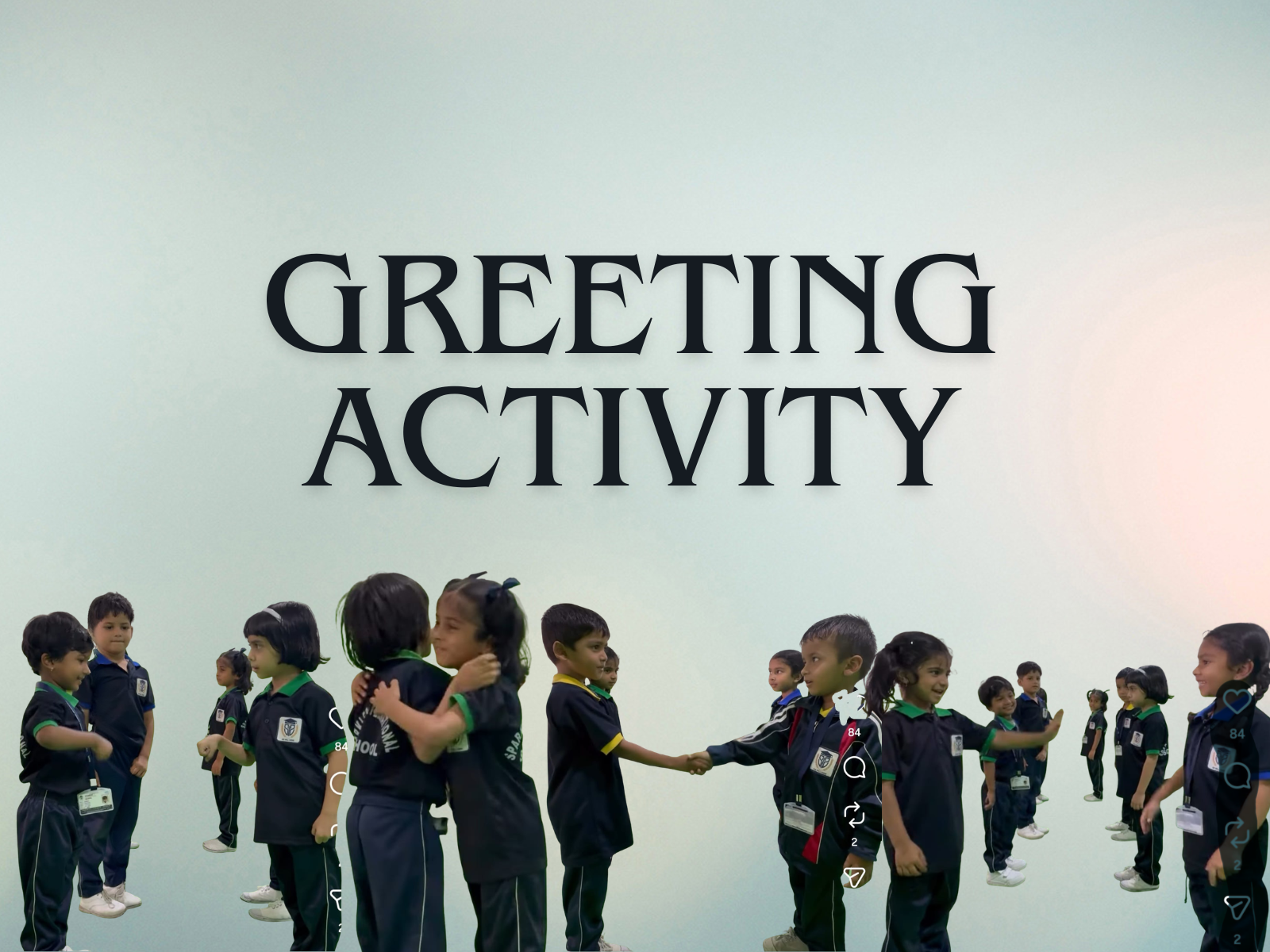
A cheerful “Hello!”, a playful fist bump or an enthusiastic high-five — sometimes, the smallest gestures can make an interaction feel special.
For children, learning to greet someone is about more than remembering a few words. It is an opportunity to practise communication, connect with classmates and discover different ways to make others feel welcome.
Through this greeting activity, students explore a variety of greetings, including waving, handshakes, fist bumps, high-fives and hugs when both people are comfortable. With their teachers’ guidance, children practise these gestures in a friendly and enjoyable learning environment.
Let the Greetings Begin!
Imagine two students meeting each other for an activity. One waves and says, “Hello!” Another offers a high-five, while a classmate chooses a friendly fist bump.
Each gesture brings a different way to say, “I’m happy to see you!”
First, teachers demonstrate the different greetings. Then, students take turns practising them with their classmates. As they try each gesture, children learn that there is more than one way to welcome someone.
The activity is simple, playful and connected to interactions children experience in everyday life.
Five Friendly Ways to Say Hello
1. A Cheerful Hello and Wave
A smile, a wave and a friendly “Hello!” are easy ways to start an interaction. Children practise greeting others using simple words and gestures.
2. A Polite Handshake
A gentle handshake introduces children to a familiar form of greeting. With teachers’ guidance, students practise the gesture and learn to approach it respectfully.
3. An Exciting High-Five
High-fives add a little energy to the activity! Children can practise this gesture as a friendly greeting or a way to celebrate a shared moment.
4. A Playful Fist Bump
A fist bump is another fun way to greet a classmate. Children learn that even a small gesture can help start a friendly interaction.
5. A Hug When Both Feel Comfortable
A hug can be a warm way to greet someone. However, children also learn that hugs should never be forced. Asking first and respecting the other person’s answer are important parts of the experience.
What Do Children Learn from Greeting One Another?
Every greeting offers a chance to practise an everyday social skill.
Communication: Children explore how words, gestures and facial expressions can help them communicate with others.
Confidence: Practising familiar greetings in a supportive environment can help children feel more comfortable starting interactions.
Social awareness: They learn to notice how others respond and choose a suitable way to greet them.
Respect for personal space: Most importantly, children discover that not everyone likes the same kind of greeting. A wave or a simple hello is just as welcome as a physical gesture.
Friendship: Taking turns and greeting classmates creates opportunities to interact, share smiles and become more comfortable with one another.
More Than a Gesture: Learning to Respect Others
The most valuable part of this activity is not simply learning how to shake hands or give a high-five. It is learning that greetings should make people feel comfortable and included.
For example, if a classmate does not want a high-five, a friendly wave is another option. Similarly, children learn to ask before giving a hug and to respect the answer.
With these small lessons, students begin to understand that kindness is not only about what we do. It is also about how we consider other people’s feelings.
How Teachers Make the Activity Meaningful
Teachers demonstrate each greeting, explain how it works and give students opportunities to practise. They encourage children to take turns, use friendly words and respect one another’s choices.
Moreover, teachers can help children understand that every person may greet others differently. Some people prefer a wave, while others may be comfortable with a handshake or fist bump.
As a result, the activity becomes an opportunity to practise communication and consideration in a simple, age-appropriate way.
Building Friendly Connections at Sparkles International School, Kalaburagi
A welcoming interaction can begin with just one word or gesture. Through the greeting activity, students get opportunities to practise saying hello, explore different greetings and understand the importance of respecting others.
With their teachers’ guidance, these everyday gestures can become meaningful opportunities to practise confidence, kindness and positive social interaction.
One little hello can be the beginning of a beautiful friendship!