

One book or many books? One pencil or a handful of pencils? For a child, every little discovery is a step towards understanding the world!
Have you ever noticed how children learn best when they can touch, see and explore things for themselves? A simple book, a colourful toy or a pencil can become an exciting learning tool when curiosity meets classroom learning.
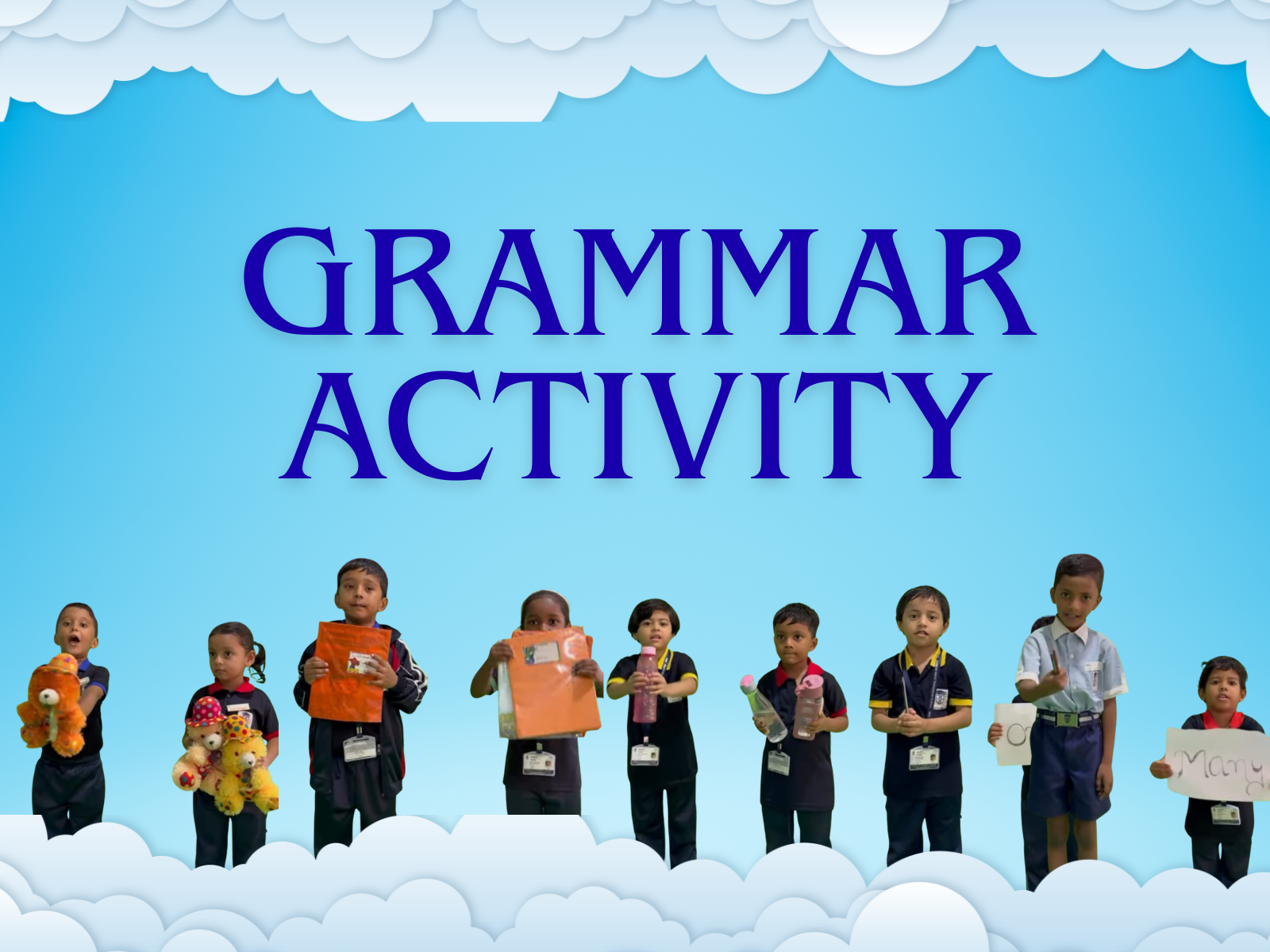
At Sparkles International School, Kalaburagi, our young learners explored the concept of singular and plural nouns through an engaging, hands-on grammar activity. Instead of simply memorising words from a textbook, children displayed familiar objects such as books, toys, mats and pencils, identifying whether they represented one item or more than one.
As they observed, compared and presented the objects, grammar became more than a lesson on the board. It became something they could see, understand and explain in their own little ways.
A Little Activity with a Big Learning Experience
One book. Two books.
One toy. Many toys.
One mat. Several mats.
These simple examples helped children explore how nouns change when we talk about one object or more than one. By using familiar classroom objects, the children could connect new language concepts with things they already recognised.
The best part? Learning did not have to feel like memorising a rule. Children had an opportunity to participate, observe differences and express what they understood.
Sometimes, the smallest classroom activities create the most meaningful opportunities for learning
The Psychology Behind the Singular and Plural Activity
One book or many books? One pencil or a handful of pencils? For a child, every little discovery is a step towards understanding the world!
Why use real objects to teach grammar instead of relying only on written examples? The answer lies in how young children learn.
1. Concrete Learning Makes Abstract Ideas Easier to Understand
Psychological principle: Concrete learning and cognitive development. Children can use real-world experiences to build their understanding of new concepts
2. Active Participation Supports Better Learning
Psychological principle: Active learning. Engaging with a concept through participation can support understanding and recall.
3. Speaking Builds Language Confidence
Psychological principle: Language development through practice and social interaction. Meaningful conversations help children use words in context.
4. Familiar Objects Make Learning More Meaningful
Psychological principle: Prior knowledge and meaningful learning. New concepts are easier to connect with when learners can relate them to what they already know.
5. Small Successes Can Encourage Confidence
Psychological principle: Positive reinforcement and self-efficacy. Encouragement and successful practice can help children feel more capable of tackling similar tasks.
Little Words, Big Discoveries!
Early learning is not only about remembering facts. It is also about developing the ability to observe, communicate, compare and make sense of everyday experiences.
Activities like singular and plural practice give children opportunities to connect language with objects they recognise. They can learn at their own pace, participate with classmates and gradually become more comfortable using new words.
At Sparkles International School, Kalaburagi, engaging classroom experiences help bring learning concepts closer to children’s everyday lives. By making room for exploration and participation, teachers can help children discover that learning grammar can be enjoyable as well as educational.
Why Activity-Based Learning Matters in Early Education
Today, it may be one book and many books. Tomorrow, it may be a new word, a complete sentence or the confidence to share an idea with the class.
Every learning journey begins with small steps. When children get opportunities to see, try, speak and understand, even a simple grammar lesson can become a meaningful experience.
At Sparkles International School, Kalaburagi, we believe that learning becomes more engaging when children are active participants in the process.
Because sometimes, understanding the difference between one and many is about more than grammar. It is also about discovering, expressing and growing—one little lesson at a time.
Looking for a school where learning goes beyond textbooks? Explore Sparkles International School and discover our approach to engaging, activity-based learning.