

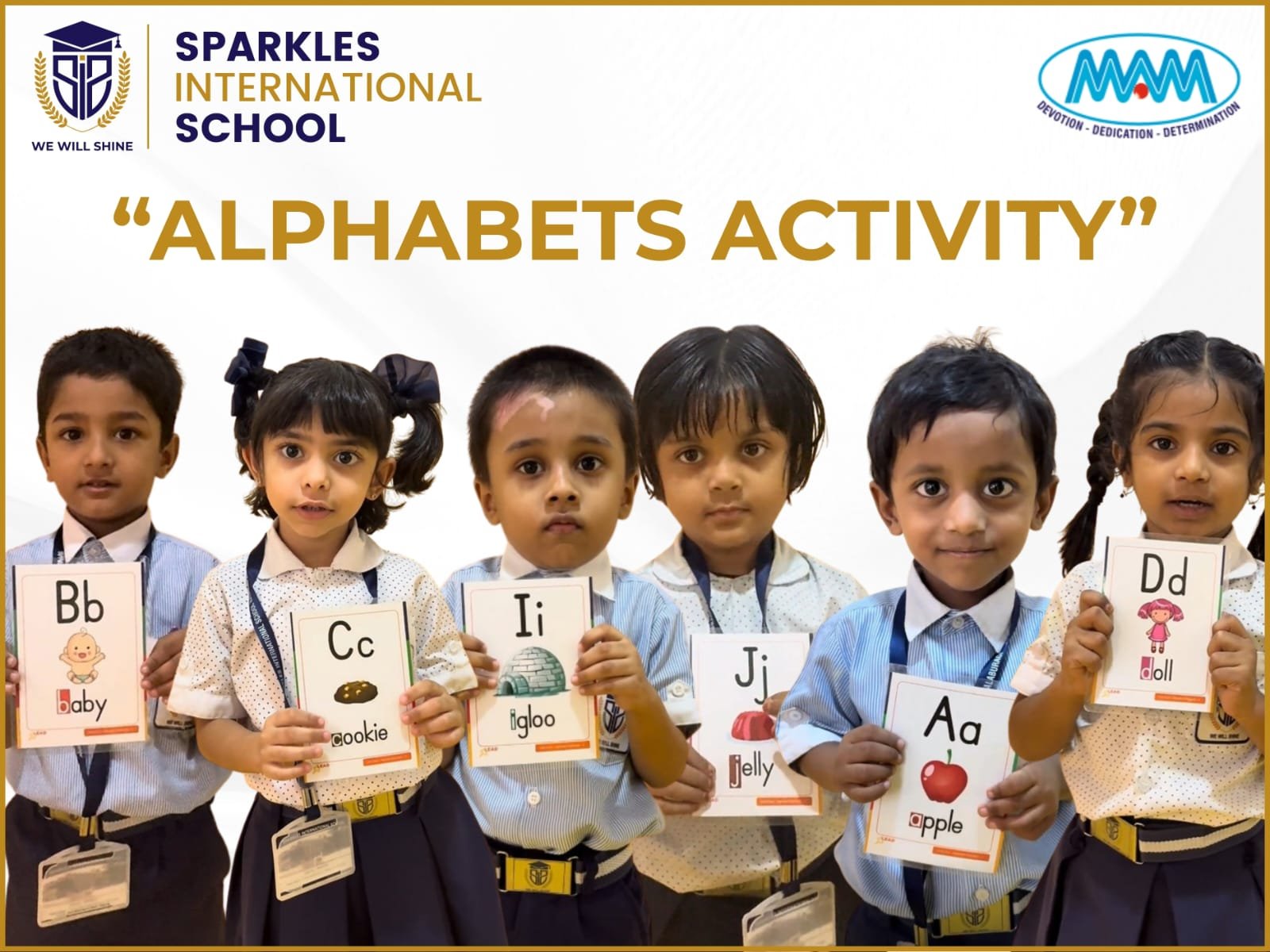
Learning the alphabet is one of the first exciting steps in a child’s reading journey. For young learners, recognising letters is only the beginning. They also need to learn how each letter is pronounced, identify the sound it represents and connect it with familiar words.
At Sparkles International School, Kalaburagi, alphabet activities can be a wonderful way to make early learning more interactive and enjoyable. With picture cards, letter games, repetition and classroom participation, children can gradually become more confident in recognising letters and understanding their sounds.
Instead of simply asking children to memorise A to Z, teachers can encourage them to see, say, hear and identify letters through engaging activities.
Why Are Alphabet Activities Important for Young Children?
Young children often learn best when they can participate actively in a lesson. Alphabet activities give them opportunities to look at letters, listen to their sounds, repeat them and connect them with familiar objects.
For example, when children learn the letter A, they can see the letter, practise saying its name, learn its common sound and connect it with a word such as apple.
Similarly, the letter B can be introduced with words such as ball, bat and bus.
These simple connections help children begin to understand the relationship between letters and words. They also support early listening, speaking and pre-reading skills.
1. Letter Recognition Activity: Learning A to Z
The first step is helping children recognise the letters of the English alphabet.
Teachers can display large alphabet cards or write letters on a classroom board. Children can then identify each letter by looking at its shape.
Start with a small group of letters and introduce more as children become familiar with them. Ask students to point to a letter, name it or find the same letter on a card.
For example:
A – Apple
B – Ball
C – Cat
D – Dog
2. Letter Sounds Activity: How Is Each Letter Pronounced?
Knowing a letter’s name is different from knowing its sound. Both are important when children begin learning to read.
Teachers can introduce the letter name first and then demonstrate its common sound. Children can listen carefully and repeat the sound together.
For example:
A – The short vowel sound heard at the beginning of apple.
B – The sound heard at the beginning of ball.
C – The sound heard at the beginning of cat.
D – The sound heard at the beginning of dog.
3. Picture and Word Matching Activity
Picture matching is a simple way to make alphabet learning more visual.
Prepare cards with letters on some cards and pictures on others. Ask children to match each letter with a picture whose name begins with the target sound.
For example:
A matches an apple.
B matches a ball.
C matches a cat.
D matches a dog.
E matches an elephant.
As children make each match, invite them to say the letter name and name the picture aloud.
4. The Alphabet Sound Hunt
Turn the classroom into a learning space by asking children to look for objects that begin with a particular sound.
For example, introduce the sound of B and invite students to identify a book, bag or ball, if those objects are available.
Ask simple questions such as:
“Can you find something that begins with the sound /b/?”
“What is the name of this object?”
“Which letter represents its beginning sound?”
Allow children to take turns answering. If an object is unfamiliar, help them say its name clearly and listen to the first sound together.
This activity connects alphabet learning with the objects children see in everyday life.
5. Alphabet Flashcard Game
Flashcards can help children practise letter recognition and recall.
Show one letter at a time and ask the class to identify it. Next, invite children to say its common sound and suggest a word that begins with that sound.
For example, when the teacher displays S, children might suggest sun, sunflower or star.
Keep the activity relaxed and encourage participation rather than focusing only on speed. Children who need more practice can revisit familiar letters before moving on to new ones.
Teachers can also mix up the cards so students practise recognising letters in different orders instead of relying only on the sequence A to Z.
6. Tracing and Writing Letters
After children have had opportunities to see and say letters, they can begin practising how to form them.
Teachers can demonstrate letter formation using a board, worksheets or suitable writing materials. Children can trace letters with their fingers before practising with a pencil or crayon.
For example, students can trace uppercase A and lowercase a, then identify both forms as the same letter.
Introduce writing gradually and focus on correct letter formation rather than speed. Young children may need repeated demonstrations and plenty of practice.
7. Learning Uppercase and Lowercase Letters
The English alphabet has uppercase and lowercase forms. Children benefit from learning to recognise both.
For example:
A – a
B – b
C – c
D – d
E – e
Teachers can place uppercase and lowercase cards on a table and ask children to find matching pairs.
Once children are comfortable, invite them to find these letters in familiar words, books or classroom displays.
This helps children understand that uppercase and lowercase letters may look different while representing the same alphabet letter.
How Teachers Can Make Alphabet Learning More Effective
A successful alphabet activity does not need to be complicated. A few simple teaching practices can help children participate and learn at their own pace.
Keep activities short and engaging. Young learners benefit from variety. Combine looking, listening, speaking, matching and tracing instead of using only one method.
Repeat letters regularly. Revisiting familiar letters helps children remember them. Mix previously introduced letters with new ones so children can practise recall.
Use familiar words. Words such as apple, ball, cat and dog are easy starting points for many young learners. Choose examples appropriate to the children’s vocabulary.
Encourage every attempt. Give children time to respond. Correct errors gently by modelling the letter name or sound and inviting them to try again.
Check understanding individually. A child may confidently repeat a sound with the whole class but need more practice when asked independently. Short, informal checks help teachers decide what to revisit.
The Role of Parents in Alphabet Learning
Parents can reinforce classroom learning through simple activities at home.
Point out letters on book covers, signs and packaging. Read picture books together and ask children to identify familiar letters. Play a game in which you name an object and invite your child to listen for its beginning sound.
Keep these activities enjoyable and suitable for your child’s age. There is no need to turn every moment into a lesson. Short, positive experiences can help children develop an interest in letters and reading.
If a child finds a letter difficult, revisit it patiently instead of comparing their progress with that of other children.
Conclusion: Making the First Steps in Reading Fun
Alphabet learning is about more than reciting A to Z. Children need opportunities to recognise letters, learn their names, practise their common sounds and connect those sounds with familiar words.
Through picture matching, flashcards, sound hunts, tracing and classroom games, teachers can make early literacy practice engaging and memorable.
At Sparkles International School, Kalaburagi, activities built around seeing, saying, hearing and identifying letters can support children’s early learning experiences. With consistent practice and encouragement from teachers and parents, children can gradually build a foundation for reading and writing.
Every letter introduces a new opportunity to learn. By making alphabet activities enjoyable and meaningful, we can help young learners take their first steps towards reading with confidence.