

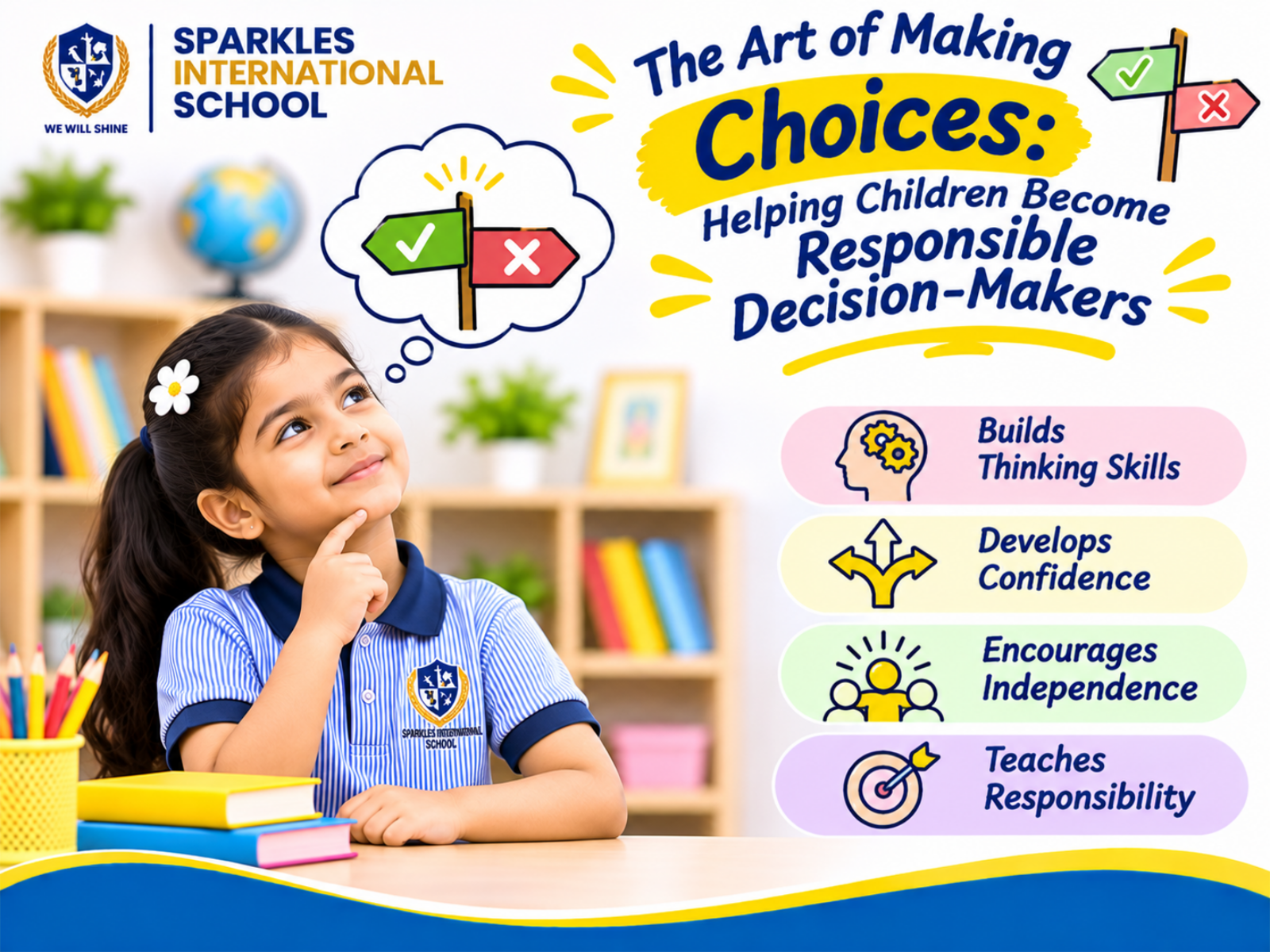
Should I choose the red pencil or the blue one? Which book would I like to read? What should I do when I face a difficult situation?
Even simple everyday questions give children opportunities to make choices. As they grow, these small decisions help them understand their preferences, take responsibility and become more confident in their actions.
At Sparkles International School, we believe that learning goes beyond textbooks. Children also need guidance and opportunities to develop practical life skills that prepare them for everyday situations.
Small Choices, Valuable Lessons
Decision-making begins with simple choices during childhood. Selecting clothes, choosing a storybook, organising school materials or deciding which activity to complete first may seem like small tasks, but they teach children to think independently.
When children are allowed to make age-appropriate choices, they gradually learn that their decisions have outcomes. This helps them become more thoughtful and responsible.
How Parents and Teachers Can Encourage Decision-Making
Children need guidance and practice to make sensible decisions. Here are a few simple ways adults can support them:
Offer Limited Choices: Allow children to choose between two or three suitable options, such as selecting a book or choosing an outfit.
Encourage Independent Thinking: Give them time to think before offering suggestions or answers.
Discuss Everyday Situations: Talk about simple situations and ask what they would do and why.
Teach Them to Plan: Encourage children to organise their school bags, arrange their belongings and complete small tasks.
Allow Them to Learn from Mistakes: Help children understand what went wrong without making them afraid of trying again.
Appreciate Responsible Actions: Recognise thoughtful decisions and efforts, even when the outcome is not perfect.
What Children Learn Through Making Decisions
Giving children opportunities to make choices supports several important skills.
Responsibility: Children begin to understand that their actions and choices matter.
Confidence: Making decisions independently helps them trust their own thinking.
Problem-Solving: They learn to consider different possibilities before choosing an approach.
Self-Discipline: Children gradually understand the importance of priorities, routines and completing responsibilities.
Accountability: They begin to recognise the results of their choices and learn to respond positively.
Mistakes Are Also Part of Learning
Children will not always make the right decision, and that is perfectly normal. Every mistake can become an opportunity to reflect, understand and improve.
Instead of immediately correcting every choice, parents and teachers can ask gentle questions such as, “What could you try differently next time?” or “What did you learn from this experience?”
Such conversations help children think about their actions without feeling discouraged.
Preparing Children for Tomorrow, One Choice at a Time
Responsible decision-making is not developed in a single day. It grows through everyday experiences, patient guidance and consistent encouragement.
At Sparkles International School, we believe in nurturing children who can think independently, act responsibly and approach new situations with confidence. As we work towards becoming the Best CBSE School in Gulbarga, our aim is to support every child’s overall development and prepare young learners for the opportunities and responsibilities ahead.
Because every responsible decision made today helps shape a more confident tomorrow!
Sparkles International School – Inspiring Young Minds, Building Bright Futures!
Frequently Asked Questions
1. Why are decision-making skills important for children?
They help children think independently, take responsibility and understand the outcomes of their actions.
2. At what age should children start making decisions?
Children can begin with simple, age-appropriate choices from an early age, with guidance from parents and teachers.
3. How can parents develop decision-making skills in children?
Parents can offer simple choices, encourage independent thinking and allow children to learn from everyday experiences.
4. How does school help children become responsible decision-makers?
Schools can encourage responsibility through classroom participation, group activities, everyday tasks and guided problem-solving.