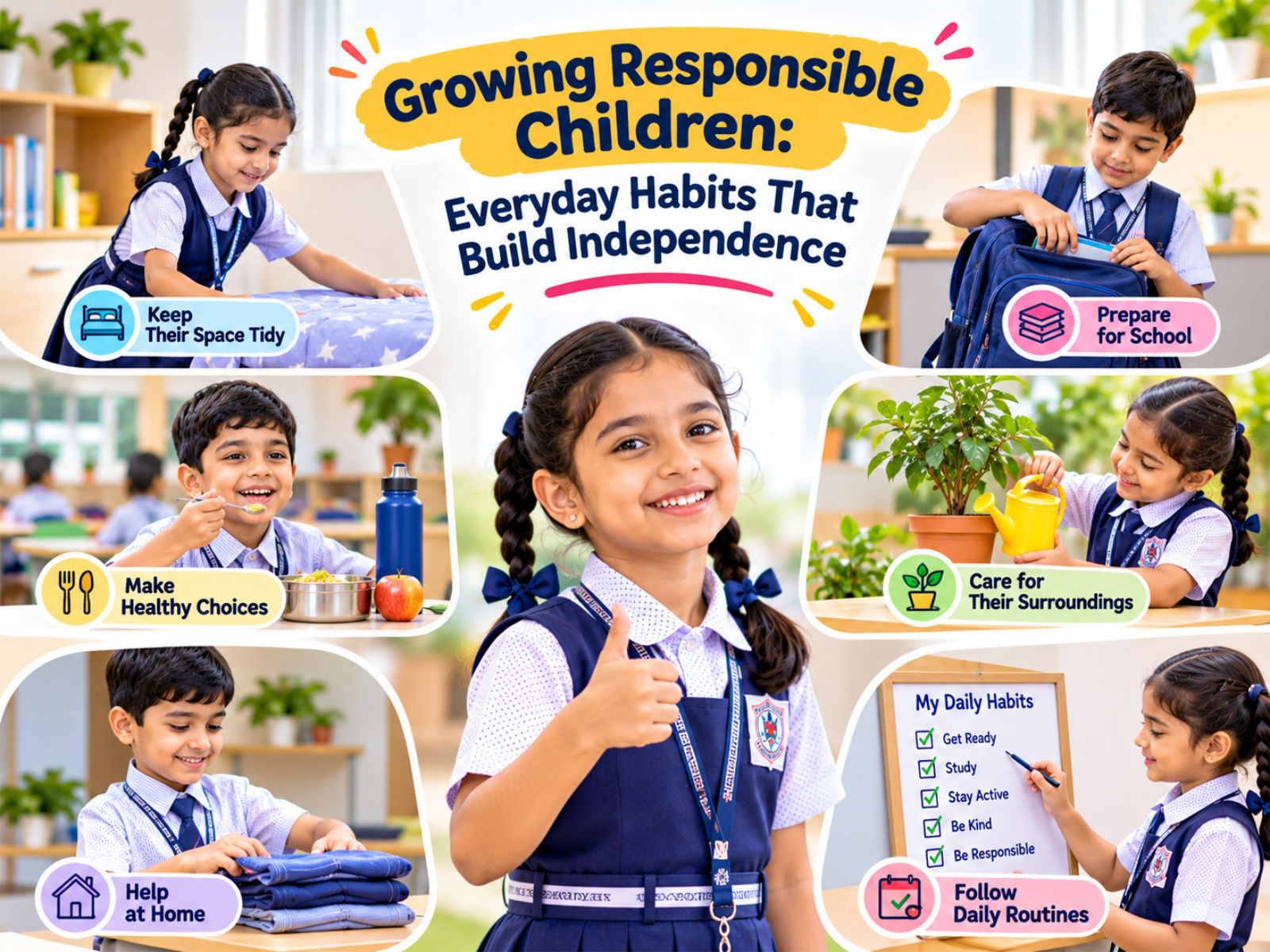
Responsibility is not something children learn overnight. It develops through small everyday experiences, from keeping their toys in place to completing simple tasks independently. When children are given age-appropriate responsibilities, they begin to understand the importance of making choices, caring for their belongings and contributing to their surroundings.
These little experiences help children become more organised, confident and independent as they grow.
Why Is Responsibility Important in Childhood?
Responsibility teaches children that their actions matter. It helps them understand routines, respect shared spaces and recognise their role at home and school.
When children learn to take responsibility from an early age, they gradually develop important life skills such as discipline, time management, decision-making and self-confidence.
5 Everyday Habits That Teach Responsibility
1. Keeping Personal Belongings Organised
Encourage children to arrange their school bags, books, shoes and toys after use. These simple habits help them understand organisation and develop a sense of ownership.
2. Completing Small Daily Tasks
Age-appropriate tasks such as watering plants, arranging books or helping set the table teach children that everyone can contribute to family life.
3. Following Daily Routines
Following regular routines for waking up, getting ready, studying and sleeping helps children understand the value of consistency and self-discipline.
4. Taking Care of Shared Spaces
Teach children to put waste in the bin, keep their surroundings clean and handle classroom materials carefully. These habits encourage respect for the environment and consideration for others.
5. Accepting the Results of Their Actions
Children should gradually learn that every action has a consequence. If they forget to put away their toys, they can be encouraged to organise them rather than having someone else do it every time.
How Parents Can Encourage Responsibility
Parents can make responsibility a natural part of childhood without placing unnecessary pressure on children.
Give children simple tasks according to their age and ability.
Explain instructions clearly and allow them time to complete tasks.
Appreciate sincere effort rather than expecting perfection.
Avoid doing everything for children when they can try independently.
Be a positive role model by practising responsible habits yourself.
Remember, mistakes are part of learning. Children need patience, guidance and encouragement as they develop new habits.
Building Responsibility Through School Experiences
School is an important place where children learn to become responsible members of a group. Following classroom routines, taking care of learning materials, completing assigned tasks and respecting classmates help them understand responsibility in everyday situations.
At Sparkles International School, we believe education should nurture good character along with academic growth. As a school aspiring to be recognised as the Best CBSE School in Gulbarga, we value the everyday learning experiences that help children develop discipline, independence and respect for others.
Small Responsibilities Prepare Children for Life
A child who learns to organise a school bag today may become an organised student tomorrow. A child who learns to care for shared belongings gradually understands respect and responsibility.
With consistent encouragement from parents and teachers, children can develop habits that support them throughout life. Give them opportunities to try, learn and take responsibility—one small step at a time.