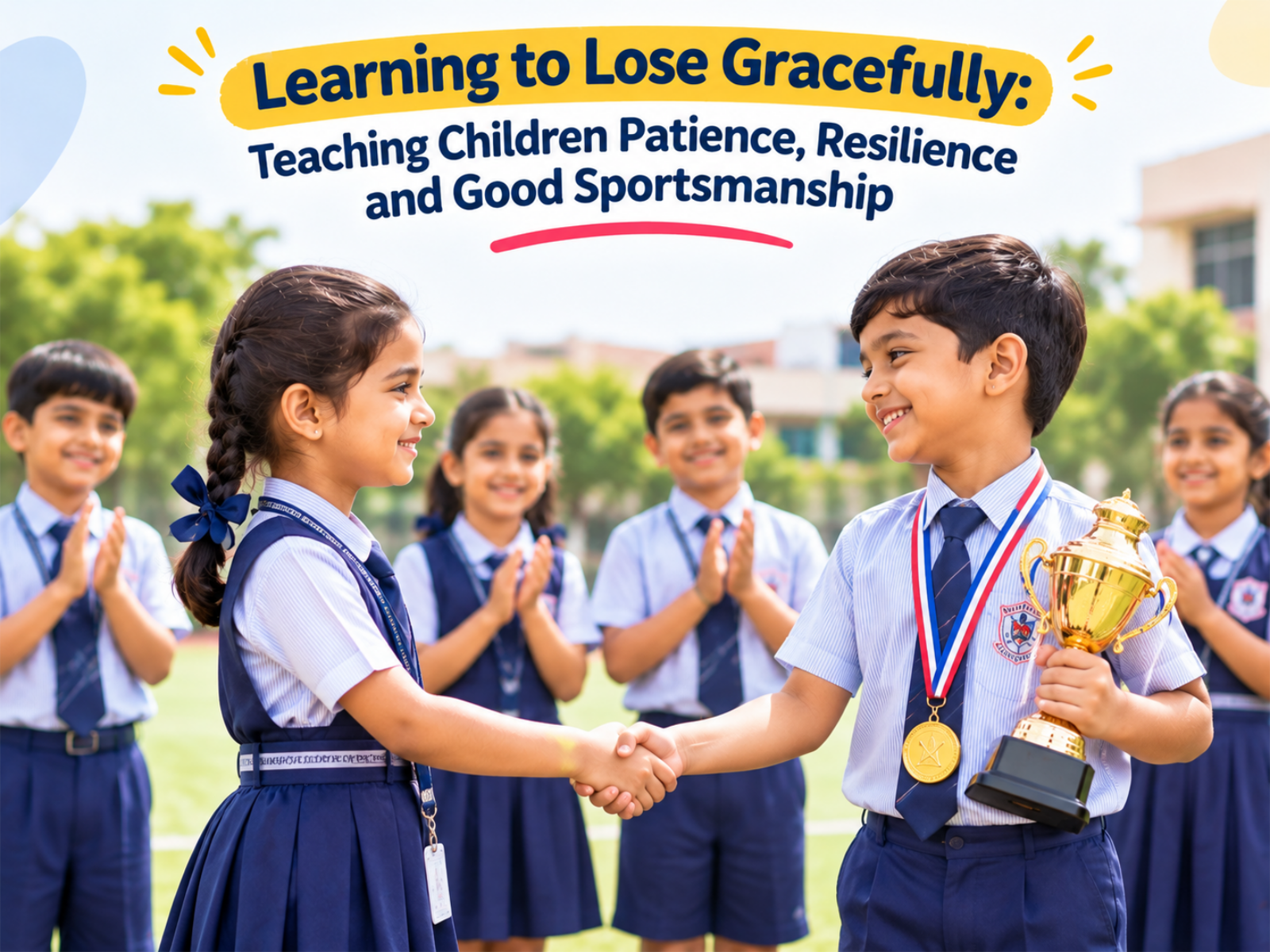
Winning feels exciting, but learning to accept defeat is just as important. Childhood games, classroom activities and friendly competitions give children valuable opportunities to understand that success is not always about coming first. Sometimes, the greatest lesson comes from learning how to respond when things do not go as planned.
Why Is It Important for Children to Accept Losing?
Children naturally enjoy winning and receiving appreciation. However, when they lose a game or do not achieve the result they hoped for, they may feel disappointed or frustrated. These moments are a normal part of growing up.
Learning to accept losing helps children understand that mistakes and setbacks are part of life. It also teaches them to respect others, manage their emotions and keep trying instead of giving up.
Important Life Lessons Children Learn Through Games
1. Patience and Emotional Control
Games teach children to wait for their turn, follow rules and manage their reactions. They gradually learn that feeling disappointed is natural, but responding calmly is important.
2. Respect for Others
Good sportsmanship begins with respecting teammates, opponents and the rules of a game. Children learn to appreciate others’ efforts, whether they win or lose.
3. Resilience and the Courage to Try Again
Losing can become an opportunity to learn. Children begin to understand what they can improve and develop the courage to participate again without being afraid of failure.
4. Team Spirit and Cooperation
Team games help children understand that everyone has a role to play. They learn to support one another, share responsibilities and celebrate collective efforts rather than focusing only on individual success.
How Parents Can Help Children Handle Disappointment
Parents play an important role in shaping how children respond to winning and losing. A few simple practices can make a meaningful difference:
Appreciate effort, participation and improvement rather than focusing only on results.
Encourage children to talk about their feelings when they are disappointed.
Remind them that everyone makes mistakes and has opportunities to improve.
Avoid comparing their performance with that of other children.
Set a positive example by accepting outcomes gracefully in everyday situations.
Creating Positive Learning Experiences at School
School activities provide children with opportunities to practise patience, cooperation and fair play. Through games, group tasks and friendly competitions, children learn to follow instructions, encourage their classmates and respect different abilities.
At Sparkles International School, learning extends beyond textbooks. As a school working towards the values associated with the Best CBSE School in Gulbarga, we believe that meaningful childhood experiences should help children develop not only academically but also socially and emotionally.
Every Experience Is an Opportunity to Grow
Children do not need to win every game to feel successful. Every attempt, challenge and setback can teach them something valuable. When adults encourage effort, kindness and perseverance, children begin to see losing not as a reason to stop, but as an opportunity to learn and improve.
The real victory is helping children grow into individuals who respect others, believe in their abilities and keep trying with a positive attitude.